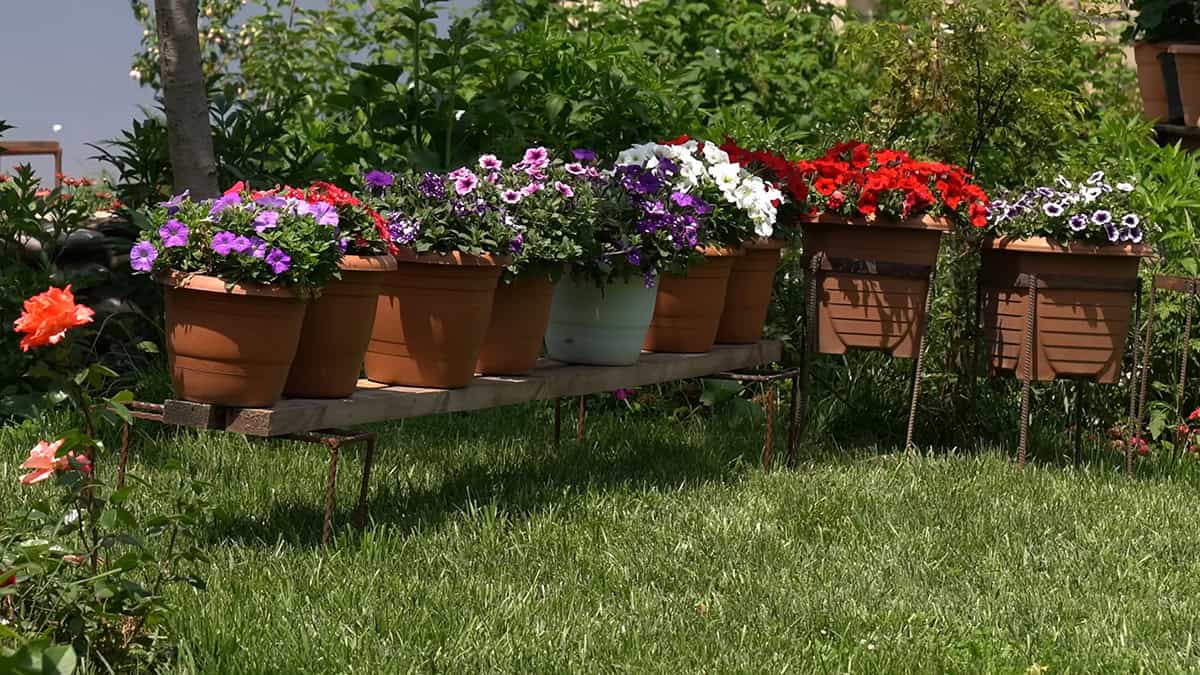
A south-facing patio bakes by early afternoon, and pots up there dry out twice as fast as garden beds.
Plants bred for that spot bloom harder in strong light, and many tolerate a missed watering on a hot day.
Flowers fill most of the twenty-five spots, and herbs, vegetables and two foliage fillers close out the list.
Table of Contents
- 25 Full Sun Container Plants
- Geranium (Pelargonium)
- Petunia
- Lantana
- Calibrachoa (Million Bells)
- Zinnia
- Marigold (Tagetes)
- Lavender
- Salvia
- Coreopsis
- Coneflower (Echinacea)
- Portulaca (Moss Rose)
- Verbena
- Snapdragon (Antirrhinum)
- Dusty Miller
- Gaillardia (Blanket Flower)
- Sweet Alyssum
- Sunflower (Dwarf Varieties)
- Rosemary
- Basil
- Tomatoes (Cherry Or Patio Varieties)
- Chili Peppers
- Ornamental Grasses (Like Blue Fescue)
- Succulents (Like Sedum Or Echeveria)
- African Daisy (Osteospermum)
- Scaevola (Fan Flower)
25 Full Sun Container Plants
Every plant below grows best with at least six hours of direct sun a day. Use a quality potting mix and pots with drainage holes, and check soil moisture daily during summer heat, since containers in full sun dry out fast.
Geranium (Pelargonium)
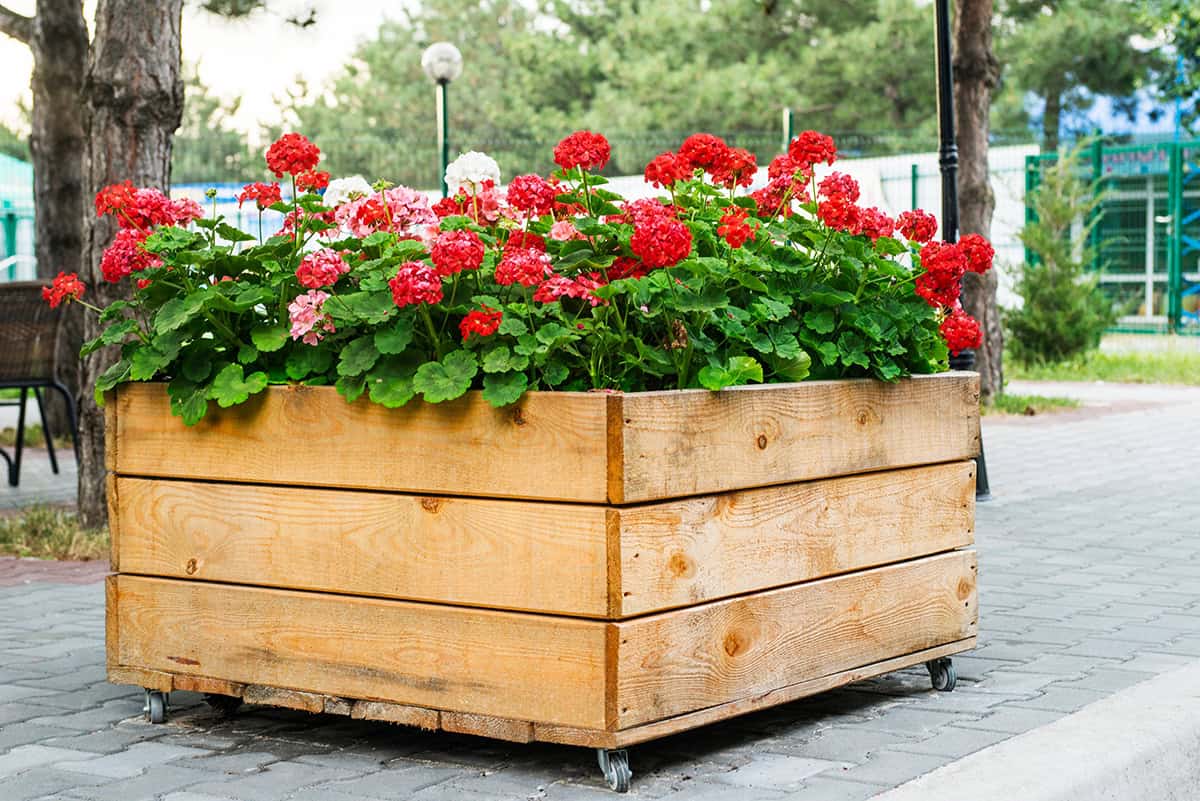
Zonal geraniums bloom in red, pink, salmon or white from spring until frost, and many carry patterned or variegated leaves. Let the top inch of soil dry between waterings, since soggy roots rot. Snap off faded flower clusters at the base of the stem for a steady supply of new blooms.
Petunia
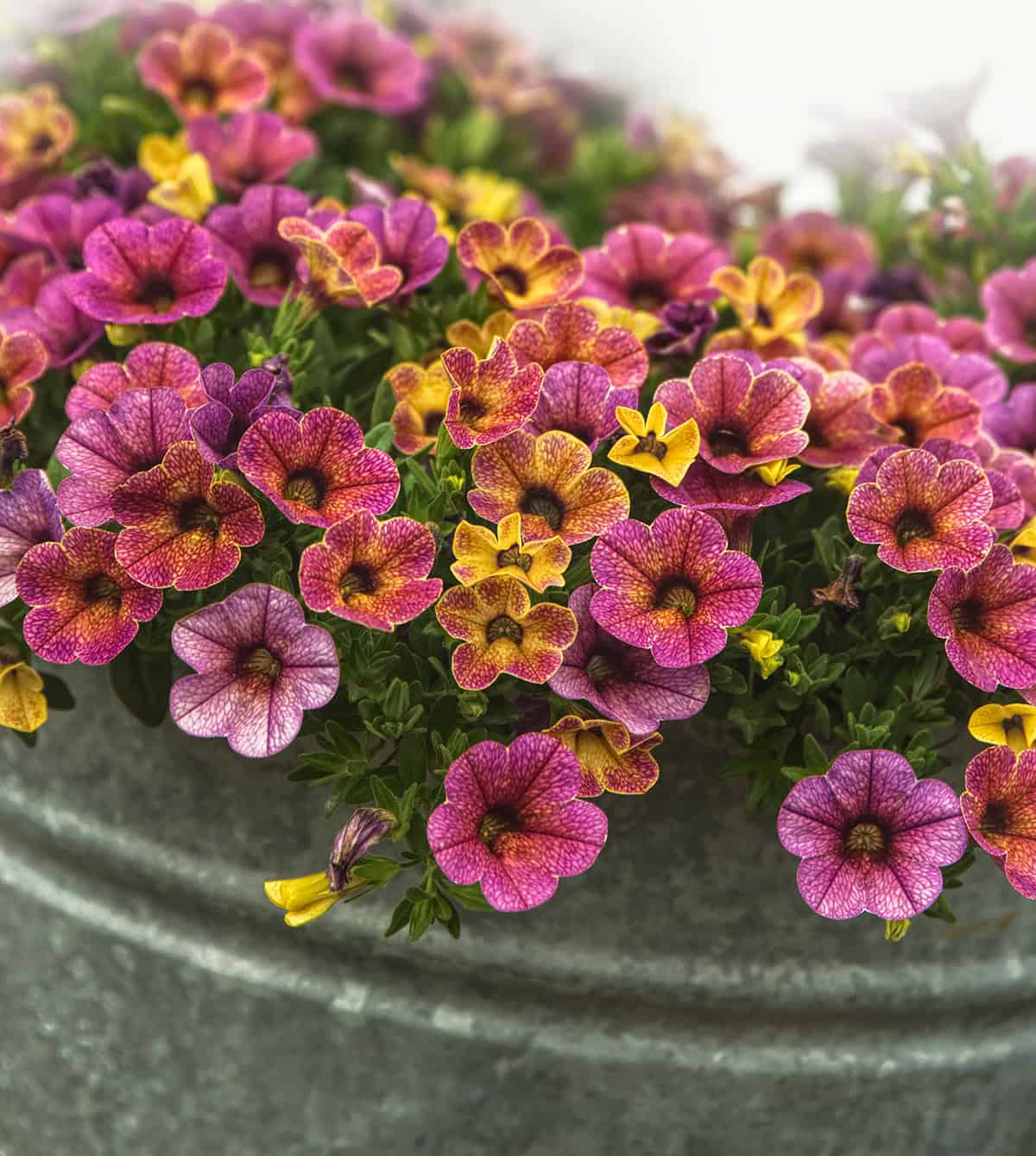
Petunias deliver nonstop color in solids, stripes, veined patterns and speckles. They handle full sun and bloom from late spring into fall. Water daily in hot weather, feed every week or two, and cut leggy stems back by a third in midsummer for bushier plants.
Lantana
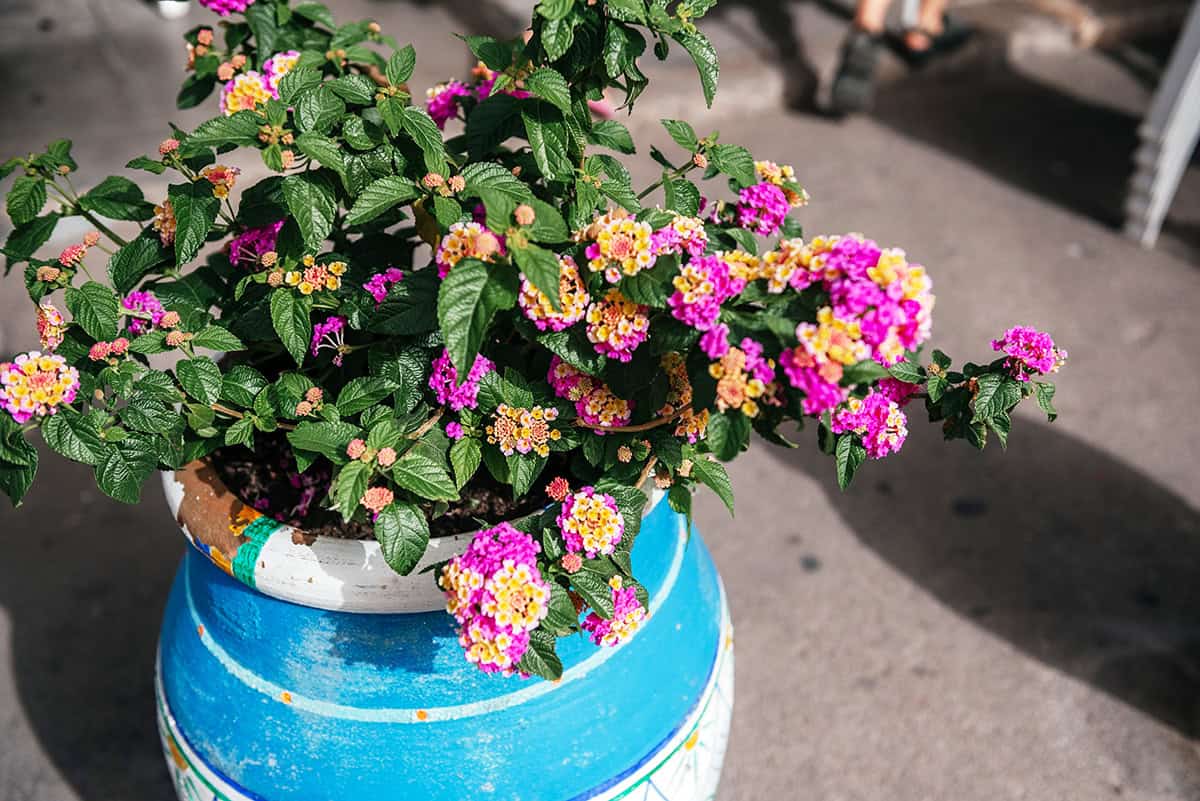
Lantana thrives in the hottest, driest corners of a patio. Clusters of tiny multicolored flowers draw butterflies all summer, and the plants shrug off heat and poor soil. Mounding types fill pots, while trailers spill over the rim, and a light trim in midsummer refreshes the blooms. The leaves and berries harm pets if eaten.
Calibrachoa (Million Bells)
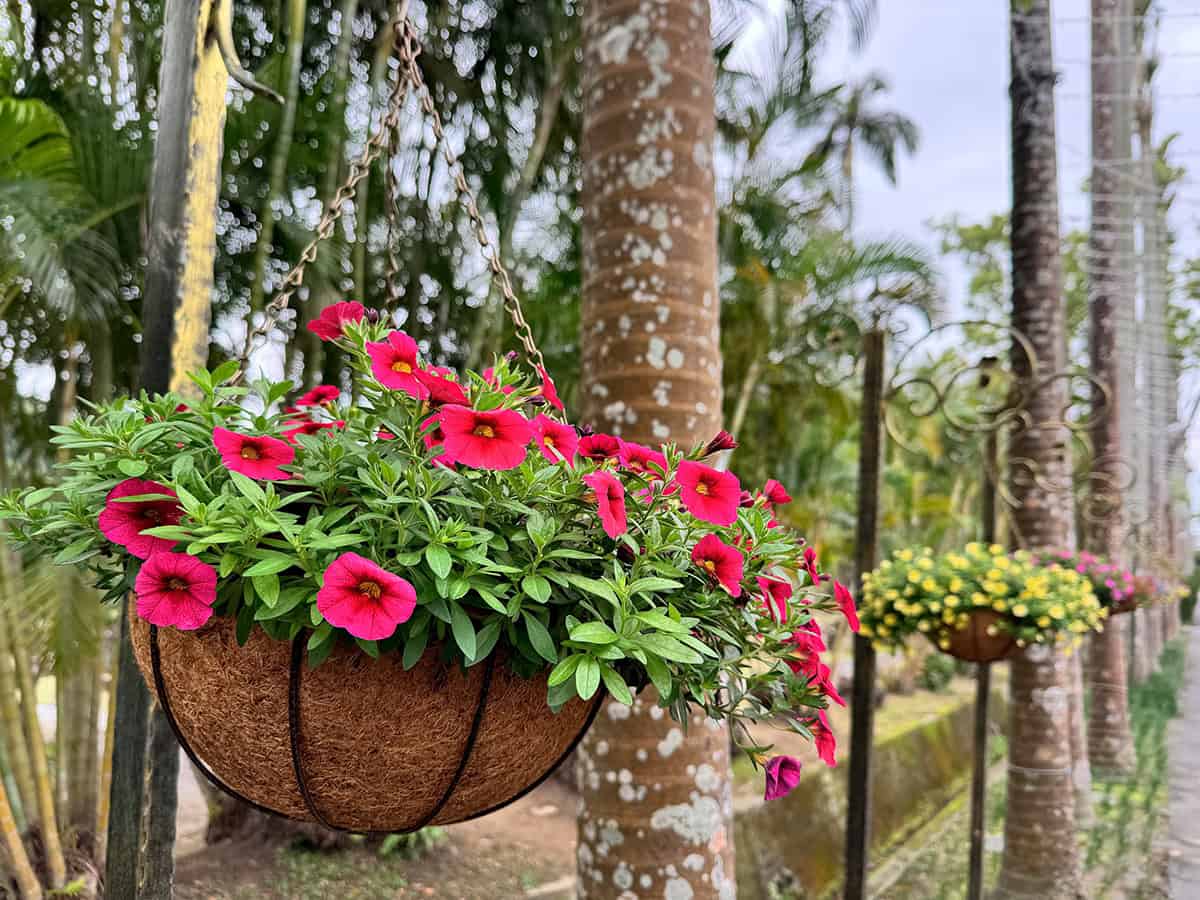
Calibrachoa looks like a miniature petunia, with hundreds of small, bell-shaped flowers spilling over the pot edge. It handles heat well and drops spent blooms on its own. Use a loose, slightly acidic potting mix and feed weekly with a liquid fertilizer for constant flowers.
Zinnia
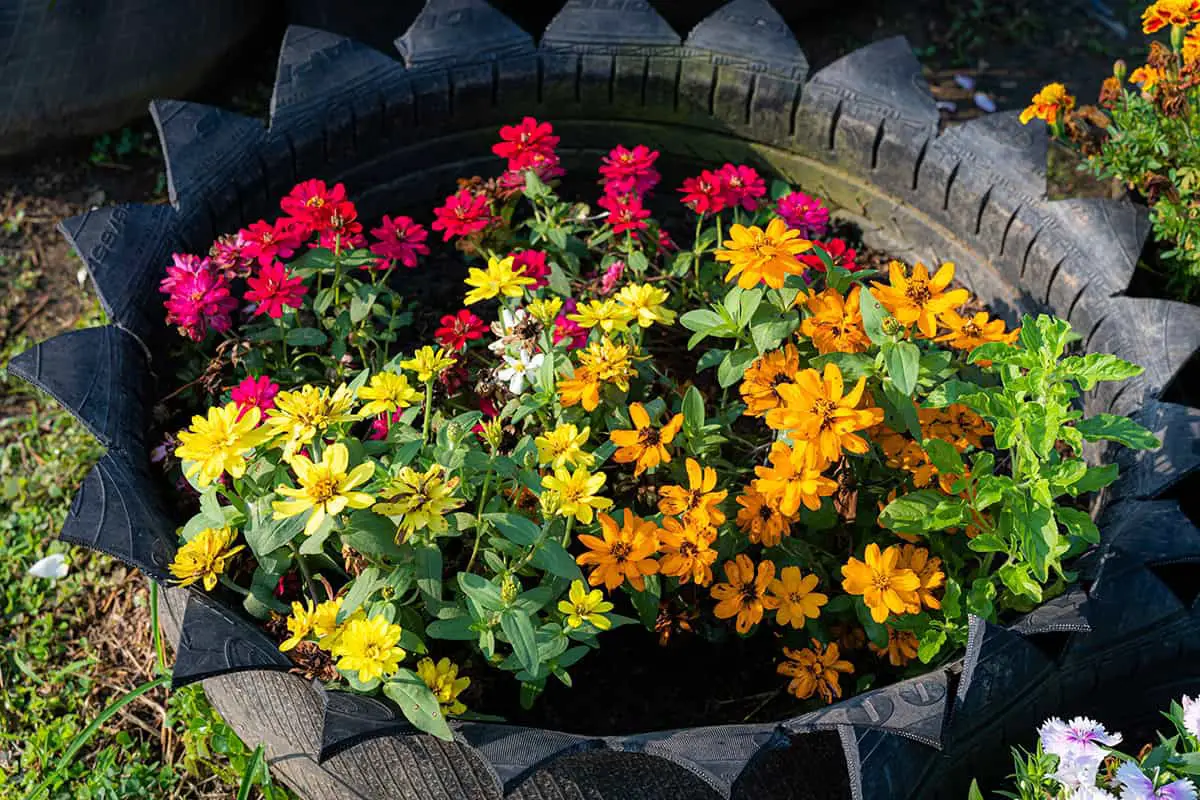
Zinnias love heat and pump out bright flowers all summer. Compact series like Profusion and Zahara fit pots best and resist powdery mildew. Water at the base when the top inch of soil dries, and cut or deadhead spent flowers to encourage more.
Marigold (Tagetes)
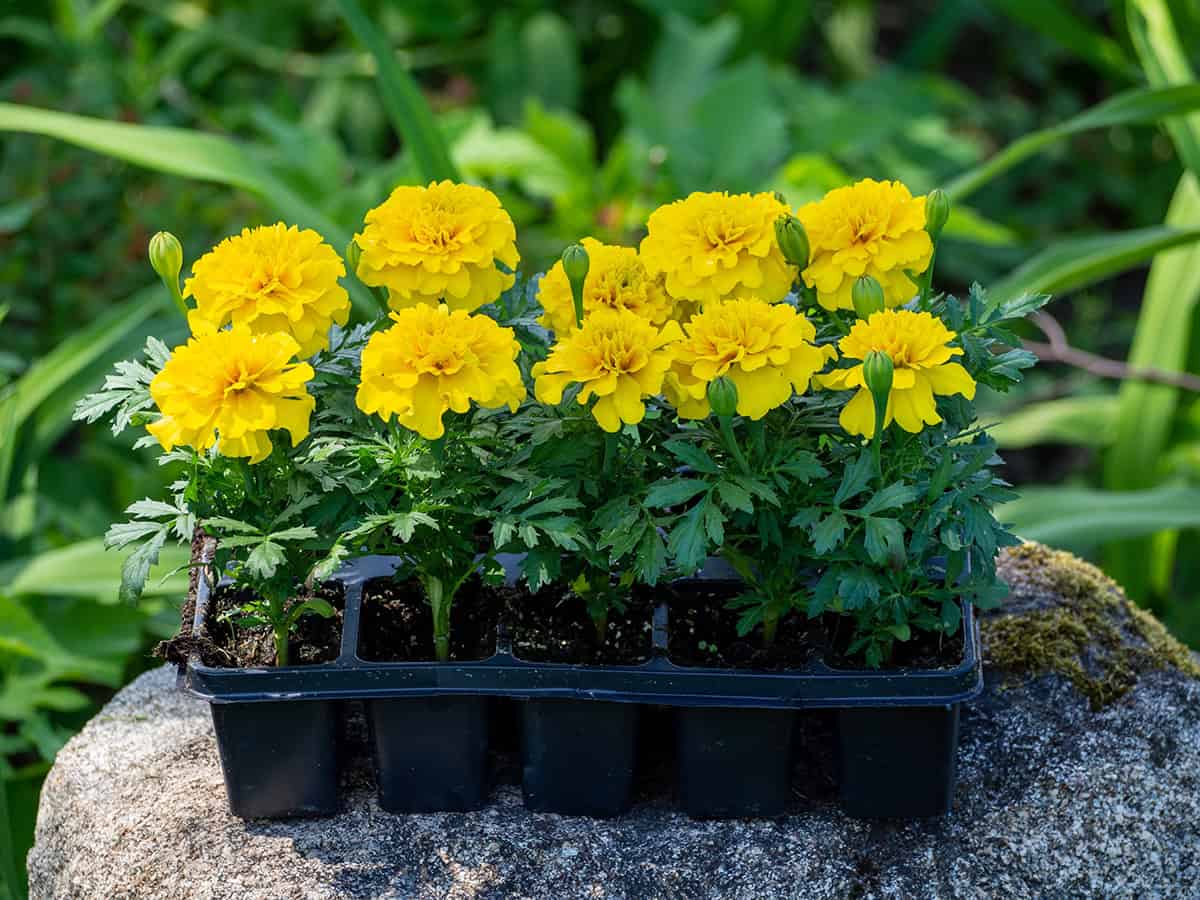
Bold gold, orange and rusty red marigolds light up sunny pots. The pungent leaves may discourage some pests. They need little care beyond well-drained soil, regular watering and occasional deadheading.
Lavender
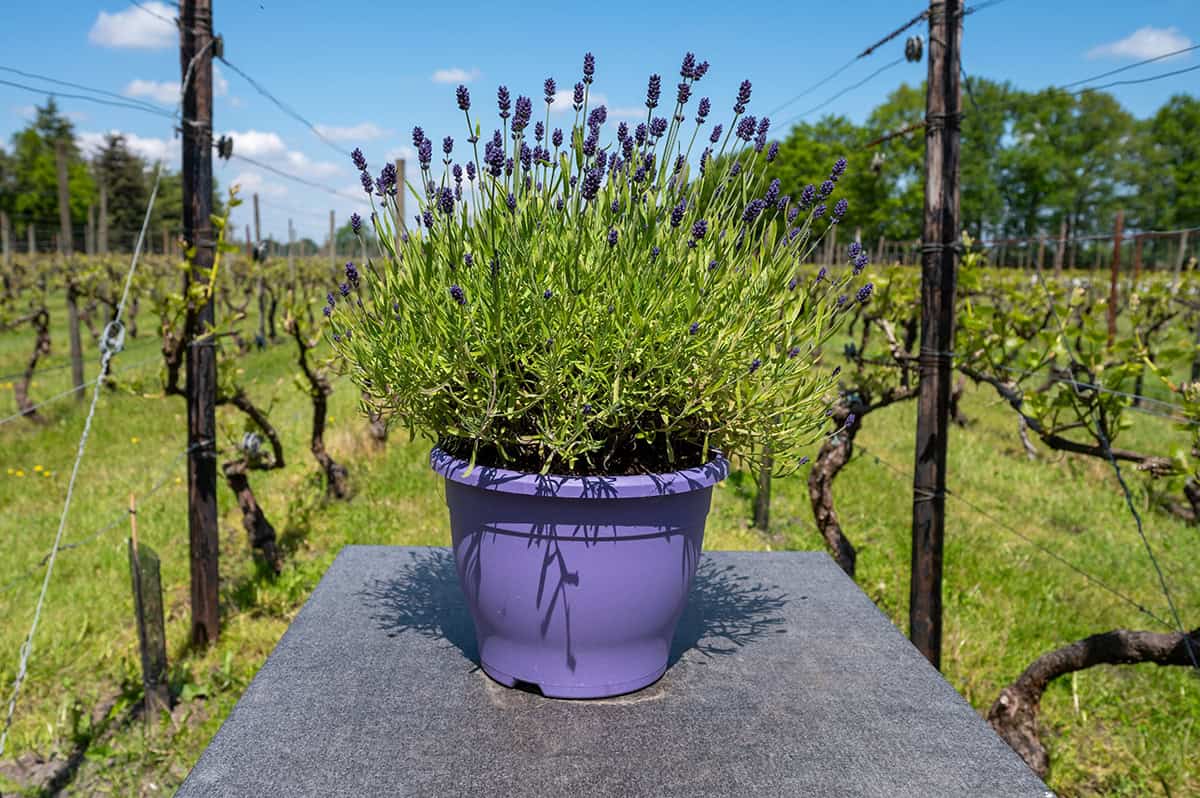
Lavender pairs silvery foliage with fragrant purple spikes. It needs full sun and a gritty, fast-draining mix, and terracotta pots help the roots dry between waterings. Overwatering kills more potted lavender than drought. Trim the stems by a third after flowering to hold a compact shape.
Salvia
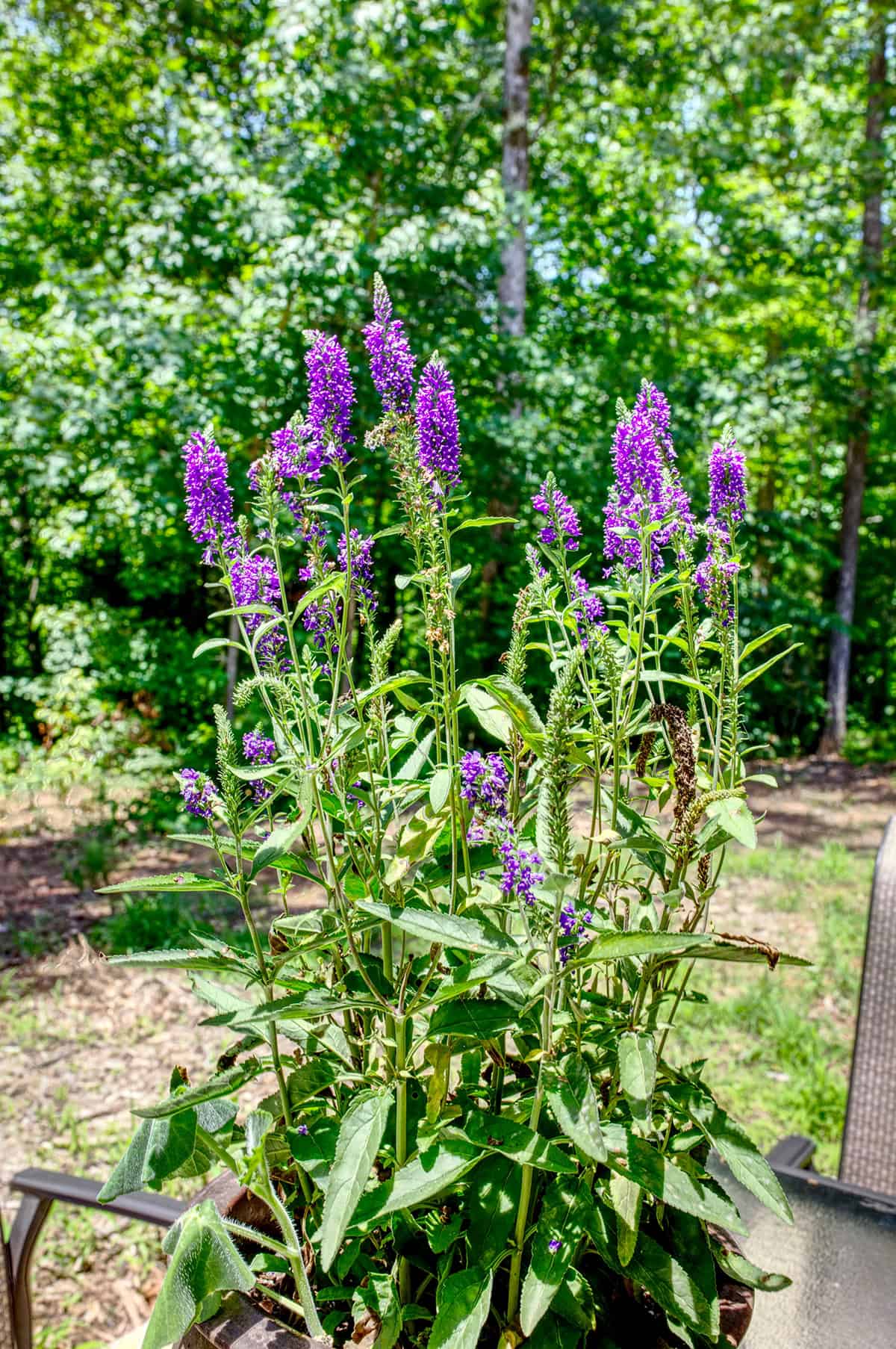
Salvias send up spikes in purple, red, blue or white that bees and hummingbirds visit all day. Plant them in a light, well-drained potting mix in full sun. Water when the top inch dries, and snip faded spikes to encourage new ones.
Coreopsis
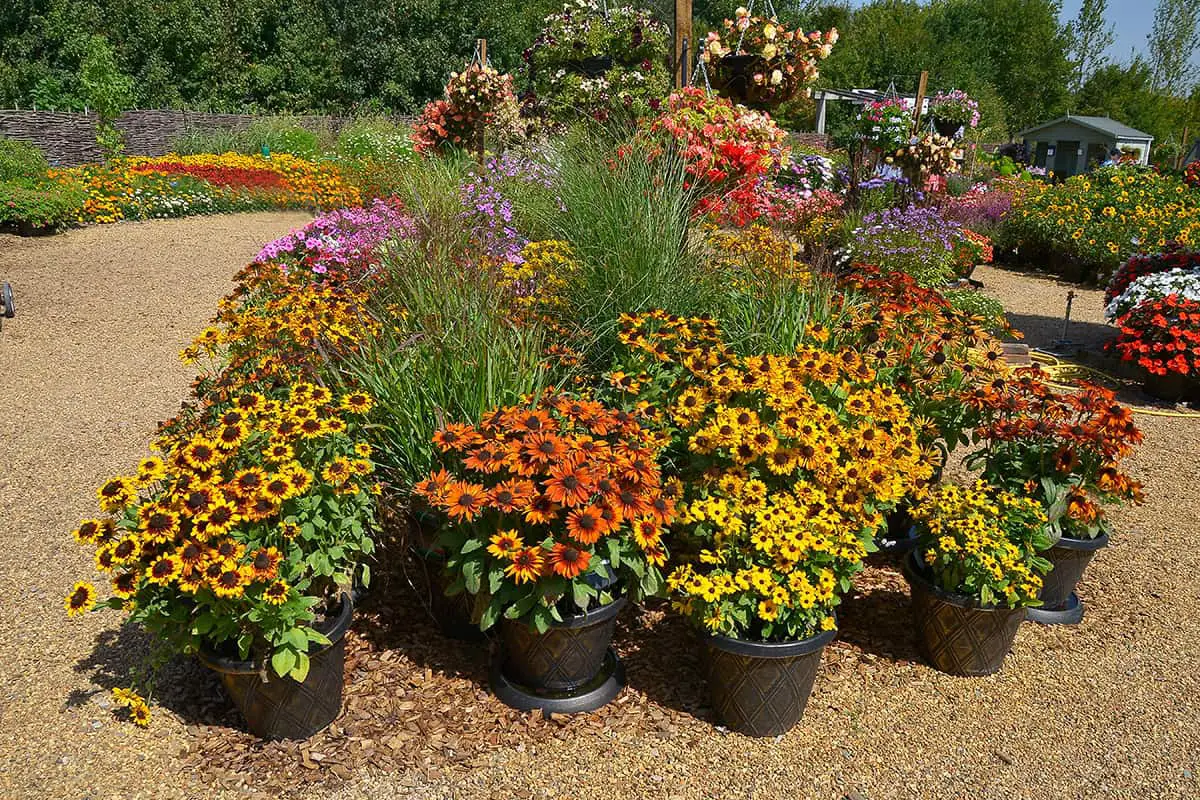
Coreopsis covers itself in yellow, gold or bicolor daisies from early summer onward. Compact varieties such as Early Sunrise and Zagreb fit pots well. Full sun and sharp drainage are all it asks, and regular deadheading stretches the bloom season into fall.
Coneflower (Echinacea)
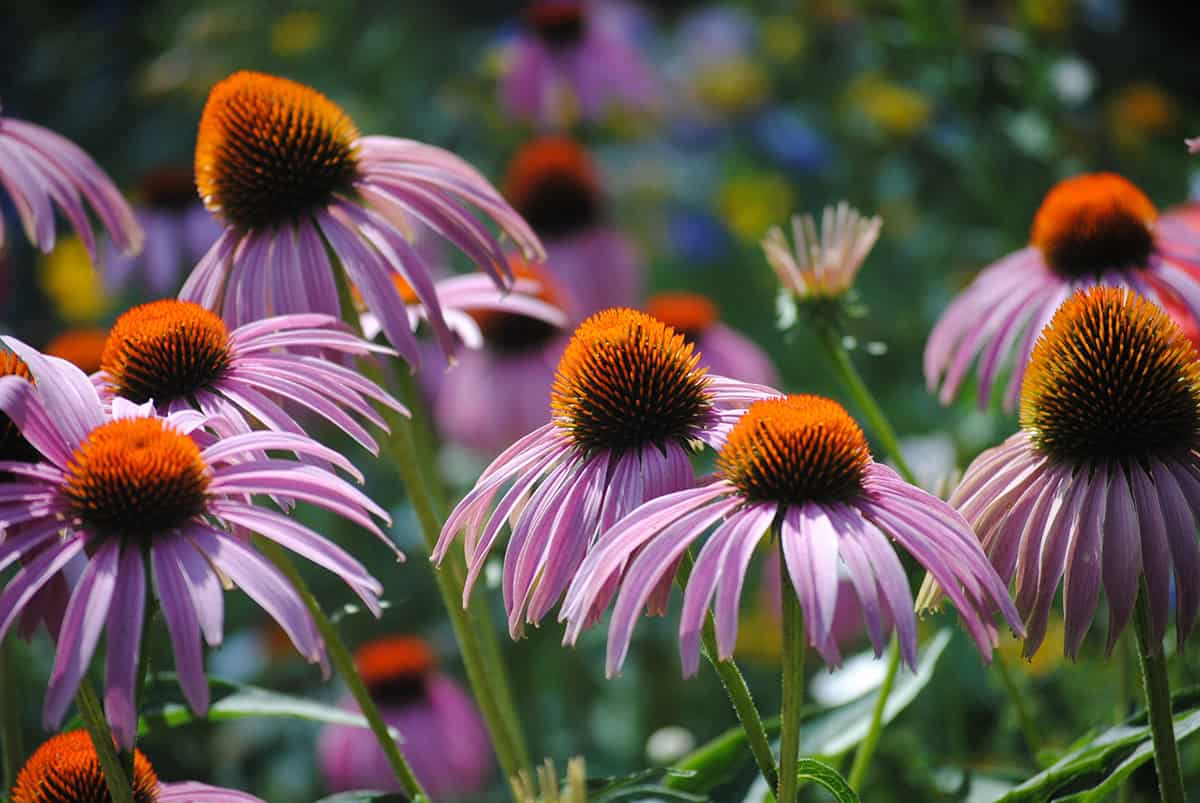
Coneflowers need a pot at least 12 to 16 inches deep for their long roots. Pink, purple, white or orange petals surround a spiky center that pollinators love. Once established, they tolerate dry spells, though soggy soil rots the crown. Compact varieties like Kismet fit containers best.
Portulaca (Moss Rose)
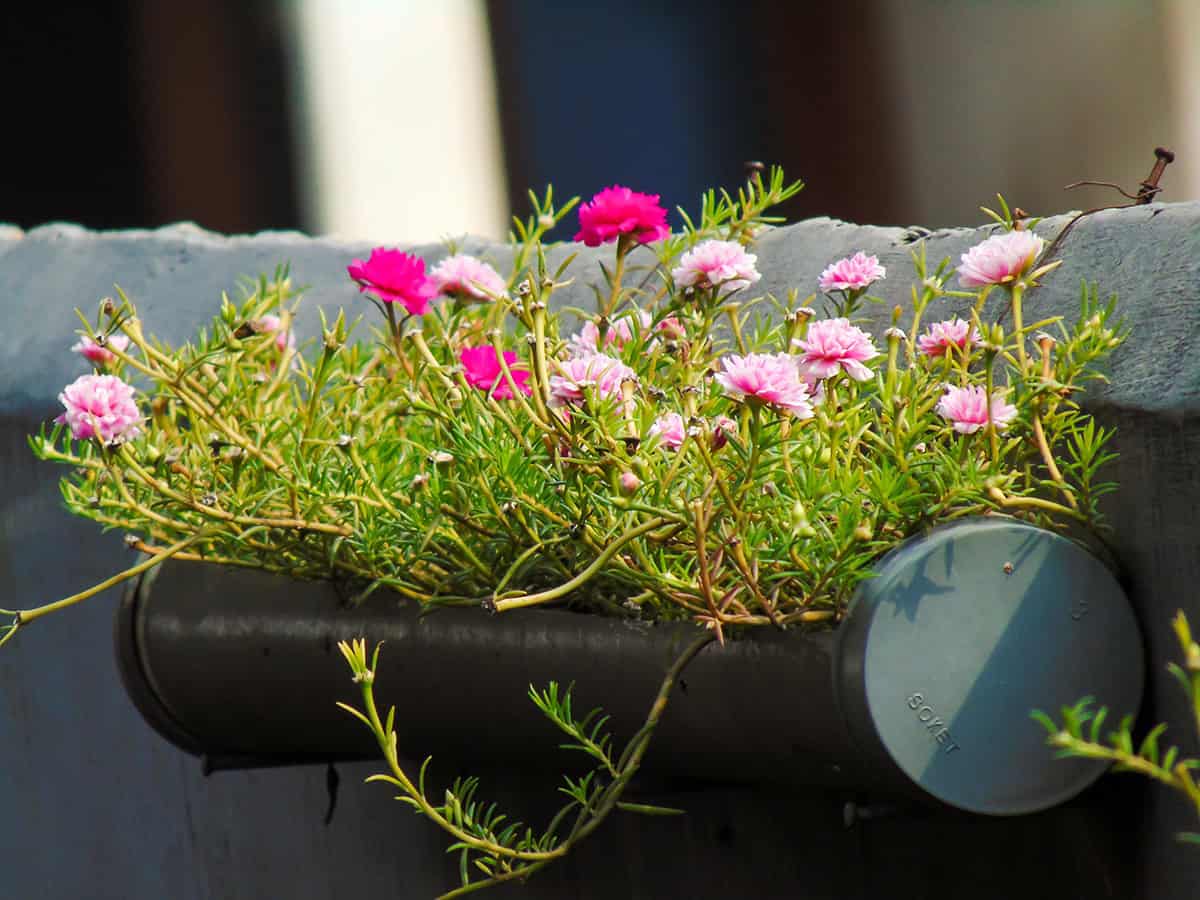
Portulaca, or moss rose, grows low, succulent foliage and bright flowers in pink, orange, yellow or white. It handles blazing sun and dry soil that wilt most other plants. Water only when the soil has dried out. The flowers open on sunny days and close at night or under clouds.
Verbena
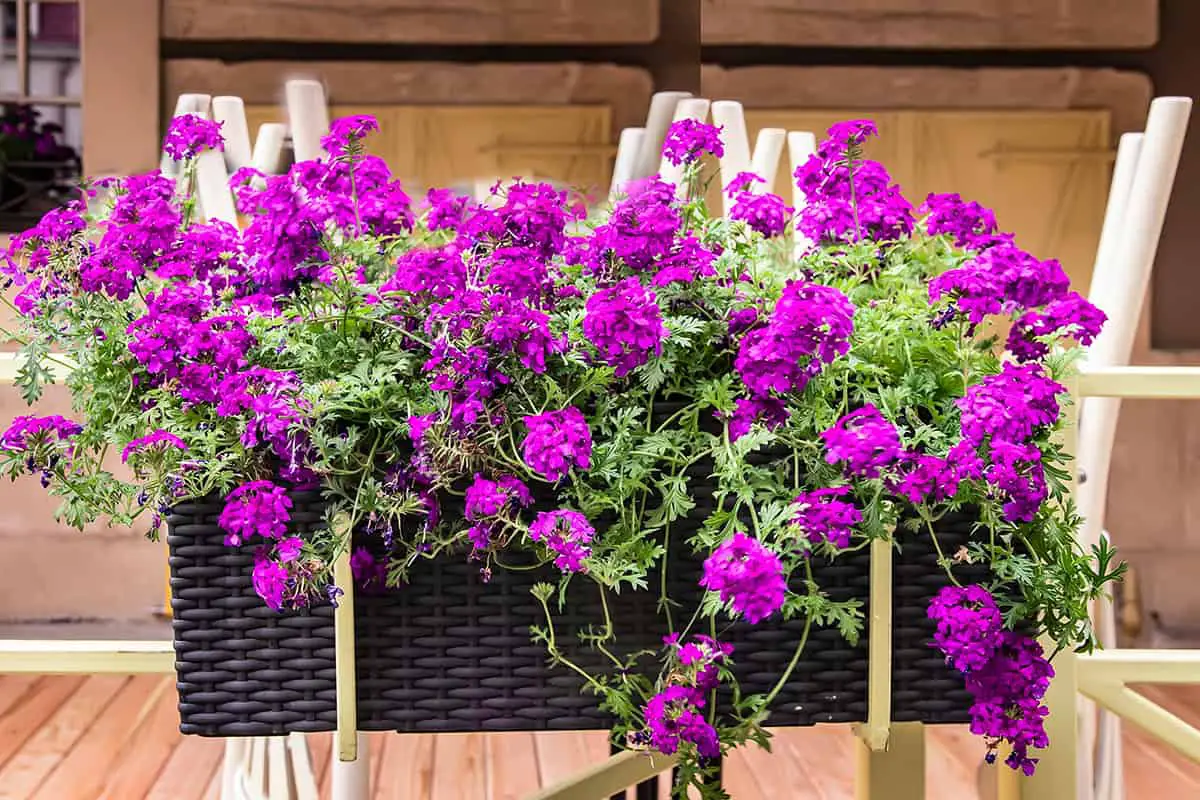
Trailing verbena spills clusters of violet, pink, red or white flowers over container edges. It loves heat and handles short dry spells. Plant in a well-drained mix and shear the stems back by a quarter after the first flush for more blooms through summer.
Snapdragon (Antirrhinum)
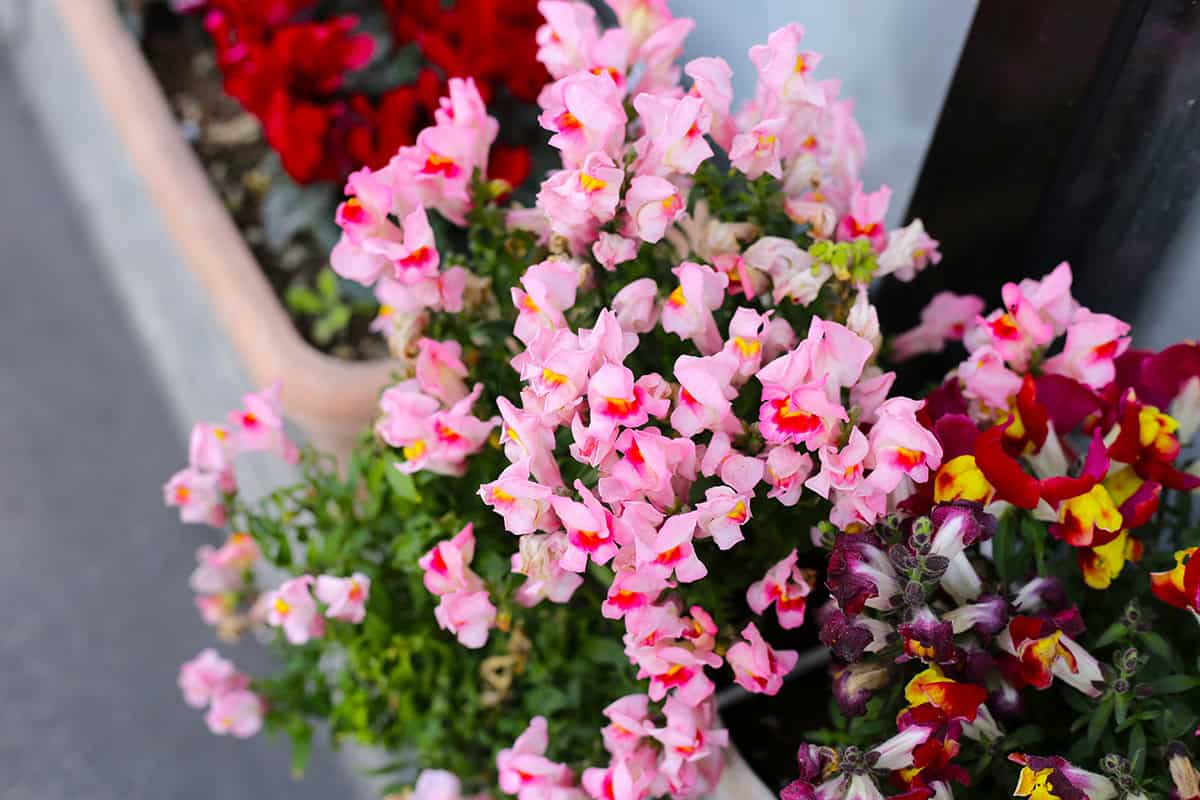
Snapdragons grow upright spikes of dragon-shaped flowers in nearly every color except true blue. They bloom best in spring and fall, when nights run cool, and frequently pause in midsummer heat. Dwarf types fit small pots. Water evenly and deadhead spent spikes.
Dusty Miller
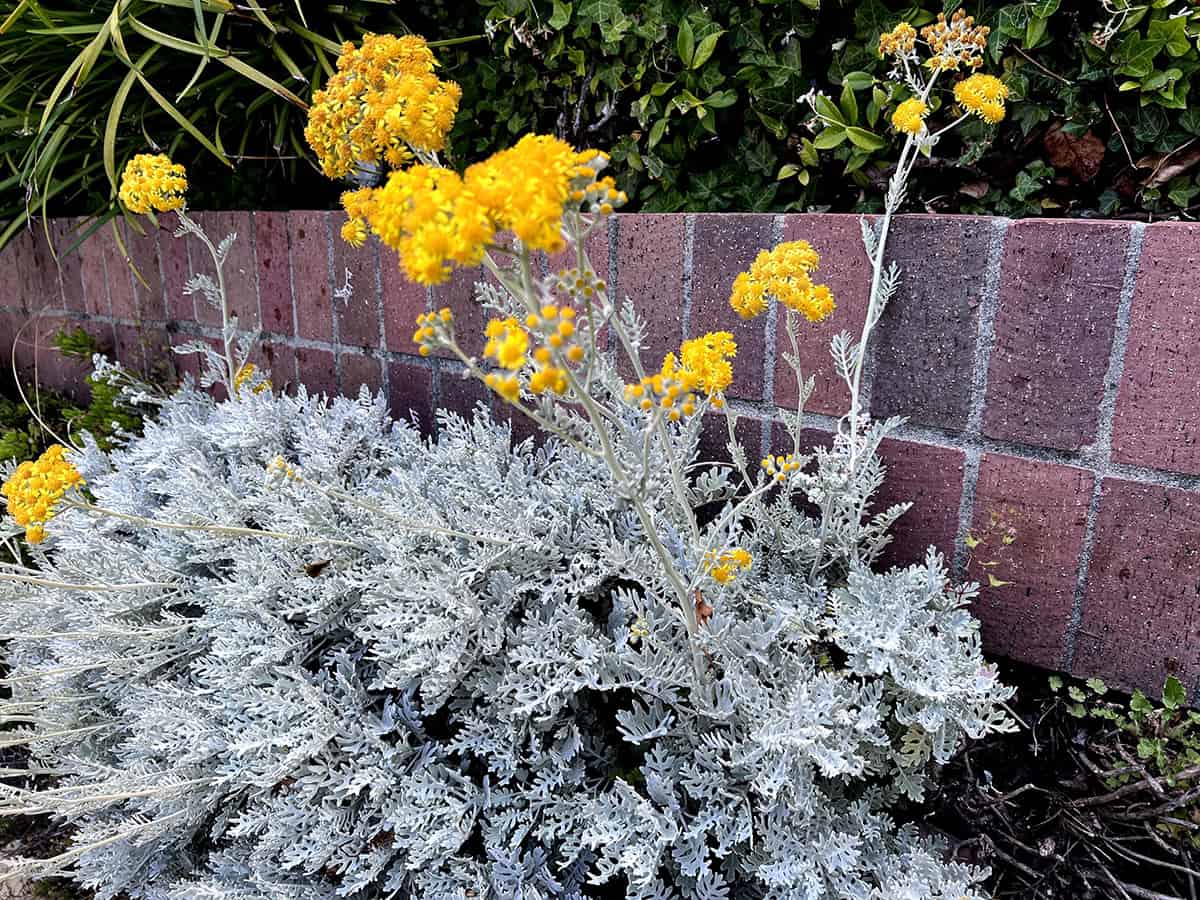
Dusty miller grows soft, silver-white leaves that set off bright flowers in mixed pots. It takes heat and sun in stride and needs only moderate water once the top inch of soil dries. The foliage holds its color all season, and the plants survive light frost into late fall.
Gaillardia (Blanket Flower)
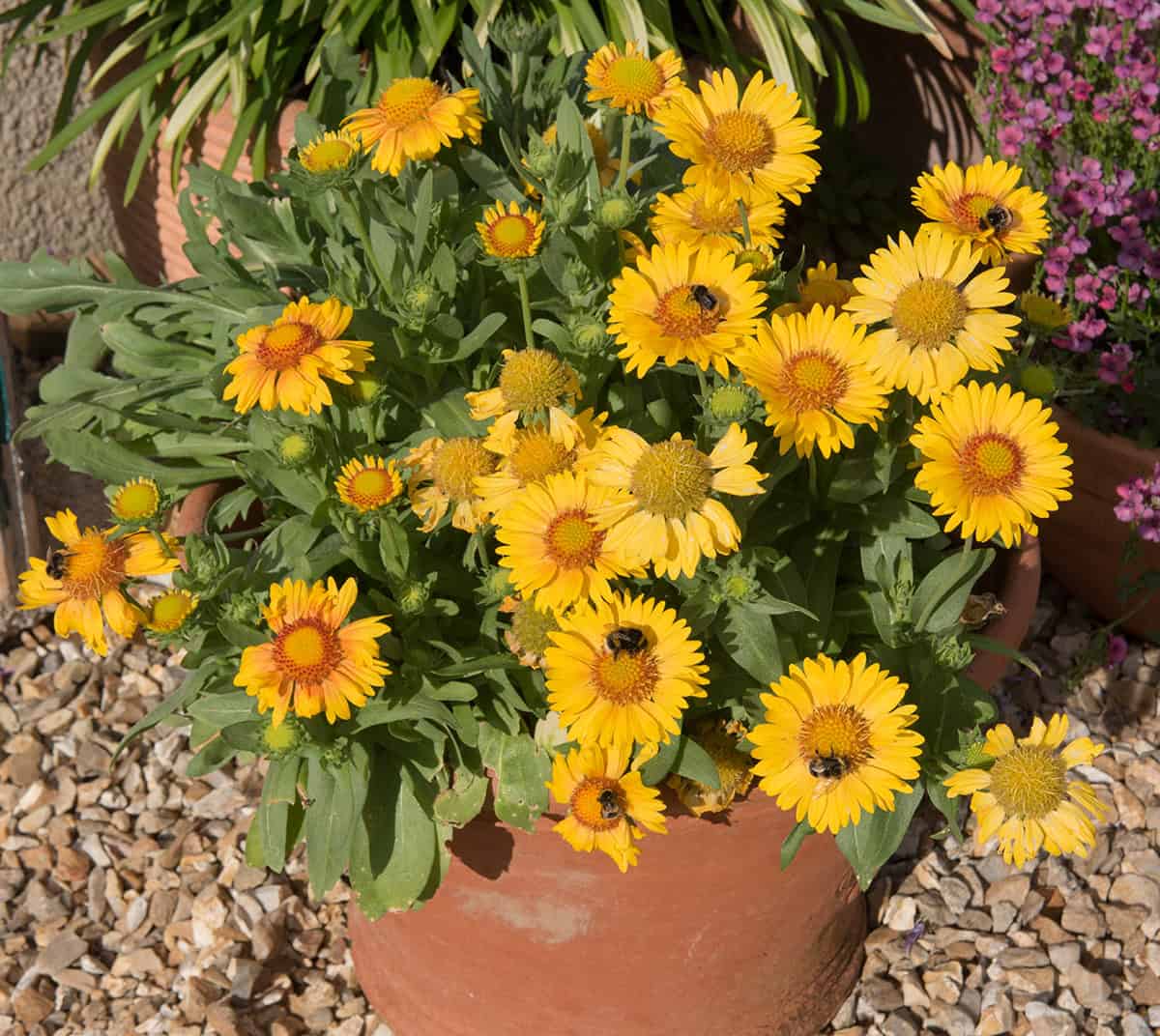
Gaillardia, or blanket flower, opens red, orange and yellow daisies banded in contrasting colors. It handles hot sun and dry soil with ease and dislikes rich, soggy potting mix. Bees and butterflies visit constantly. Deadhead spent flowers to extend blooming until frost.
Sweet Alyssum

Sweet alyssum forms low mounds of tiny white, pink or purple flowers with a light honey scent. It grows best in sun with cooler temperatures and slows in high summer heat, though regular watering and a midsummer shearing restart the bloom. Tuck it around the base of taller plants as a filler.
Sunflower (Dwarf Varieties)
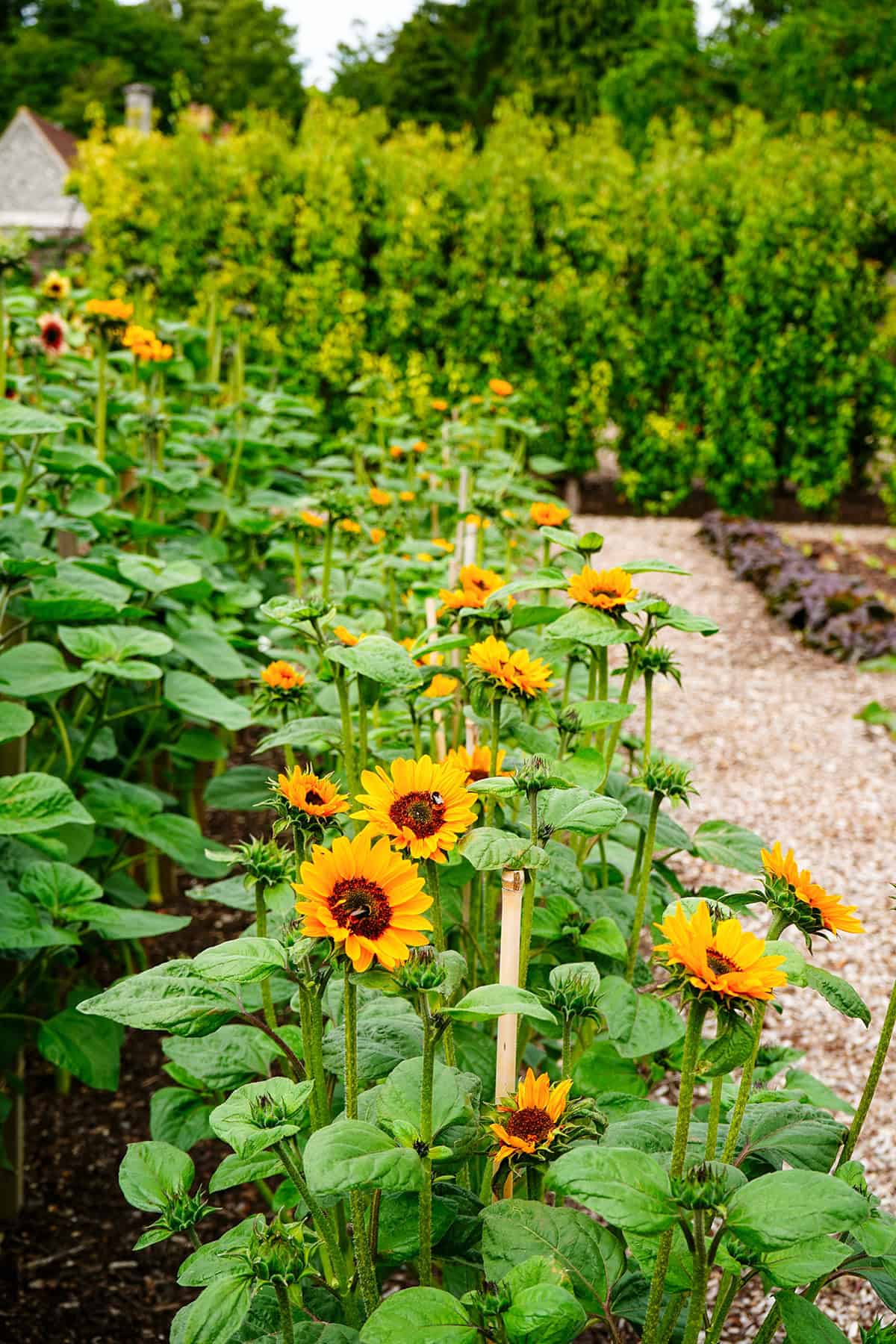
Dwarf sunflowers such as Teddy Bear, Big Smile and Suntastic grow 1 to 3 feet tall and fit containers. Golden blooms with large centers draw bees. Use a pot at least 12 inches deep, water consistently, and sow seeds in spring for flowers in about 60 to 70 days.
Rosemary
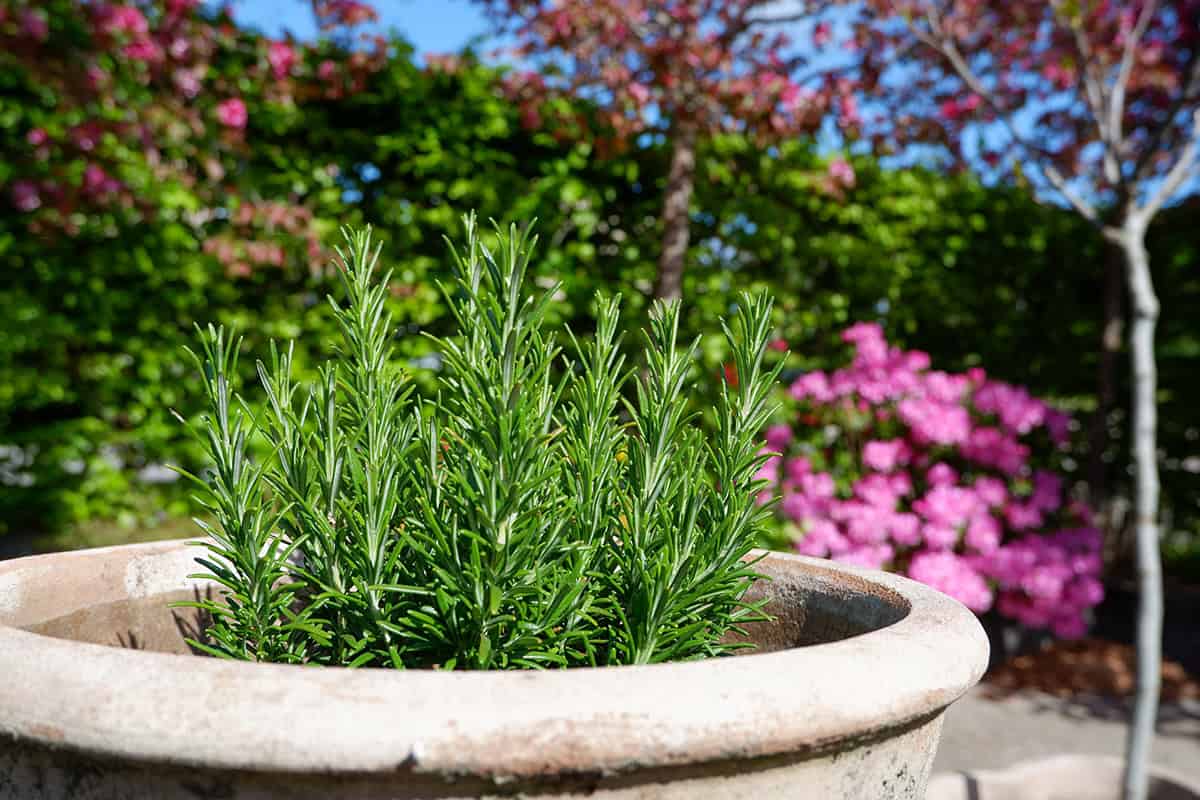
Rosemary grows upright and woody, with needle-like leaves and small blue flowers in spring. It needs full sun and a gritty, fast-draining mix, and water only once the soil dries. Snip sprigs regularly for cooking, which shapes the plant and encourages fresh growth.
Basil
Basil grows fast with six or more hours of sun and steady moisture. Water when the top inch of soil dries, and pinch the stem tips and flower buds regularly for bushier plants and more leaves. Basil dies at the first frost, and cold nights below 50°F blacken the leaves.
Tomatoes (Cherry Or Patio Varieties)
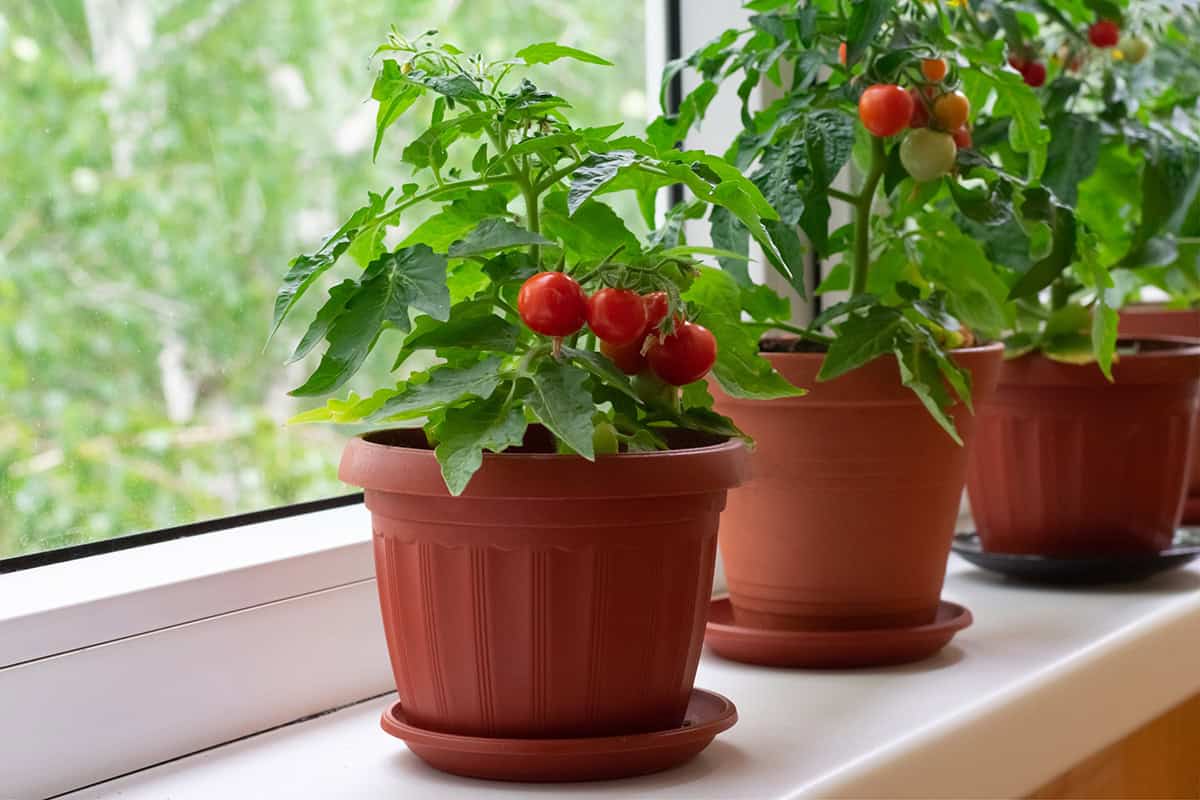
Cherry and patio tomatoes produce heavy crops in sunny containers. Pick a pot of at least 5 gallons, ideally 10 to 15 for indeterminate cherry types, and add a sturdy cage or stake at planting. Water deeply and consistently to prevent blossom end rot and split fruit, and feed every couple of weeks once flowers appear. Compact varieties like Patio Princess and Tumbling Tom fit small spaces.
Chili Peppers
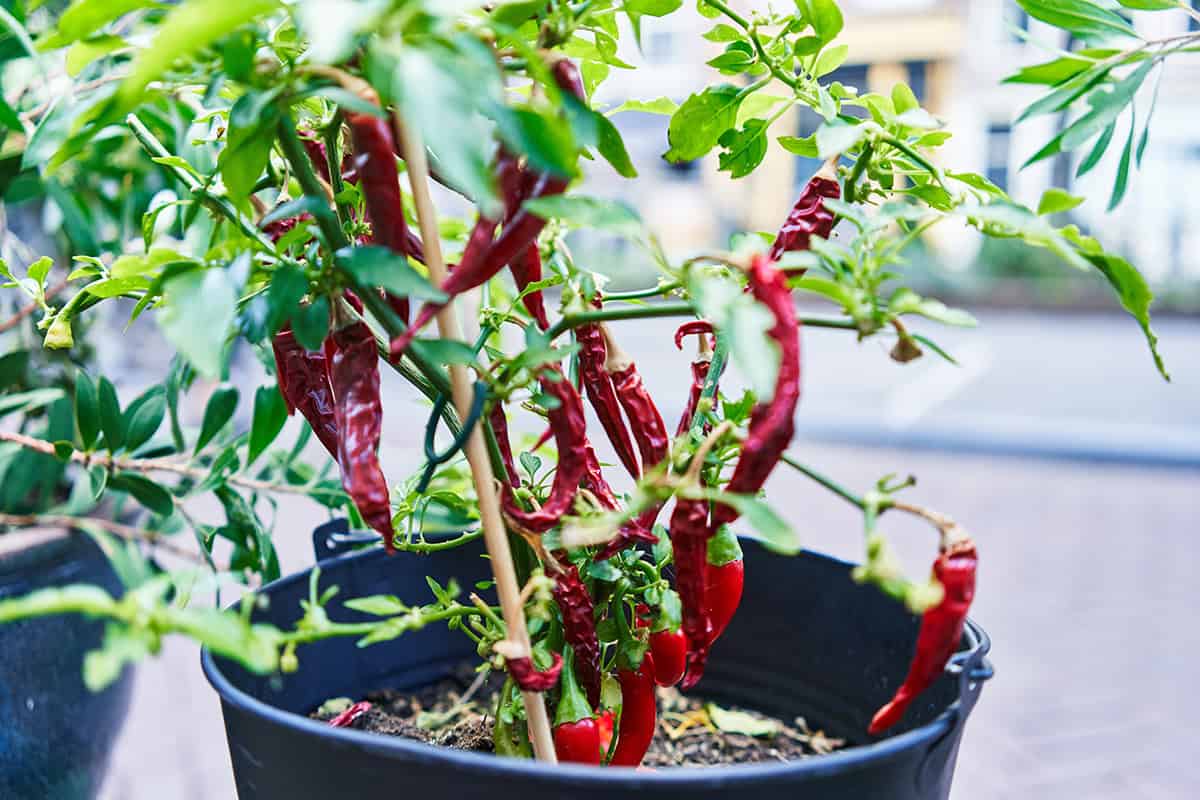
Chili peppers love heat and strong sun, and their compact size fits pots of 2 to 5 gallons. Varieties span mild jalapeños, fiery habaneros and ornamental types with purple or multicolored fruit. Let the top inch of soil dry between waterings, and harvest once the peppers reach full color for the best flavor.
Ornamental Grasses (Like Blue Fescue)
Fine leaves and gentle movement set ornamental grasses apart in a container display. Blue fescue forms neat, silvery blue tufts about a foot tall and tolerates drought once established. Plant in full sun and well-drained mix, and skip heavy feeding, since most grasses need very little fertilizer.
Succulents (Like Sedum Or Echeveria)
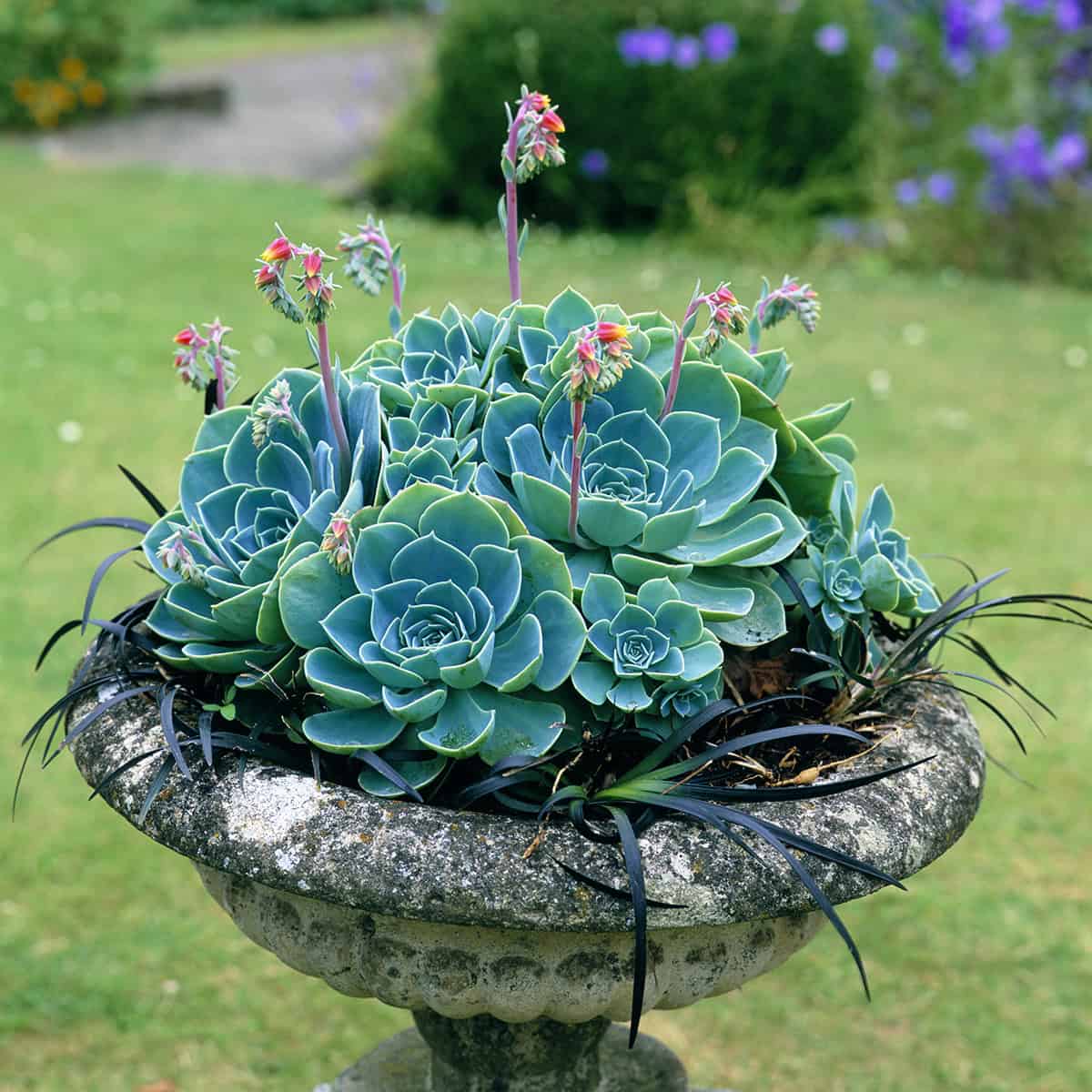
Sedum and echeveria store water in thick leaves and handle full sun with little care. Trailing sedums spill over pot edges, while echeveria forms tidy rosettes. Use cactus mix in a pot with drainage, and water only once the soil dries out completely. Acclimate nursery plants to full sun over a week to prevent scorched leaves.
African Daisy (Osteospermum)

African daisies produce large flowers in white, purple, yellow, pink or orange, many with blue centers. They bloom hardest in spring and fall, with cooler nights, and pause in the hottest weeks. The petals close at night and on cloudy days. Water moderately in well-drained mix and deadhead to extend flowering.
Scaevola (Fan Flower)
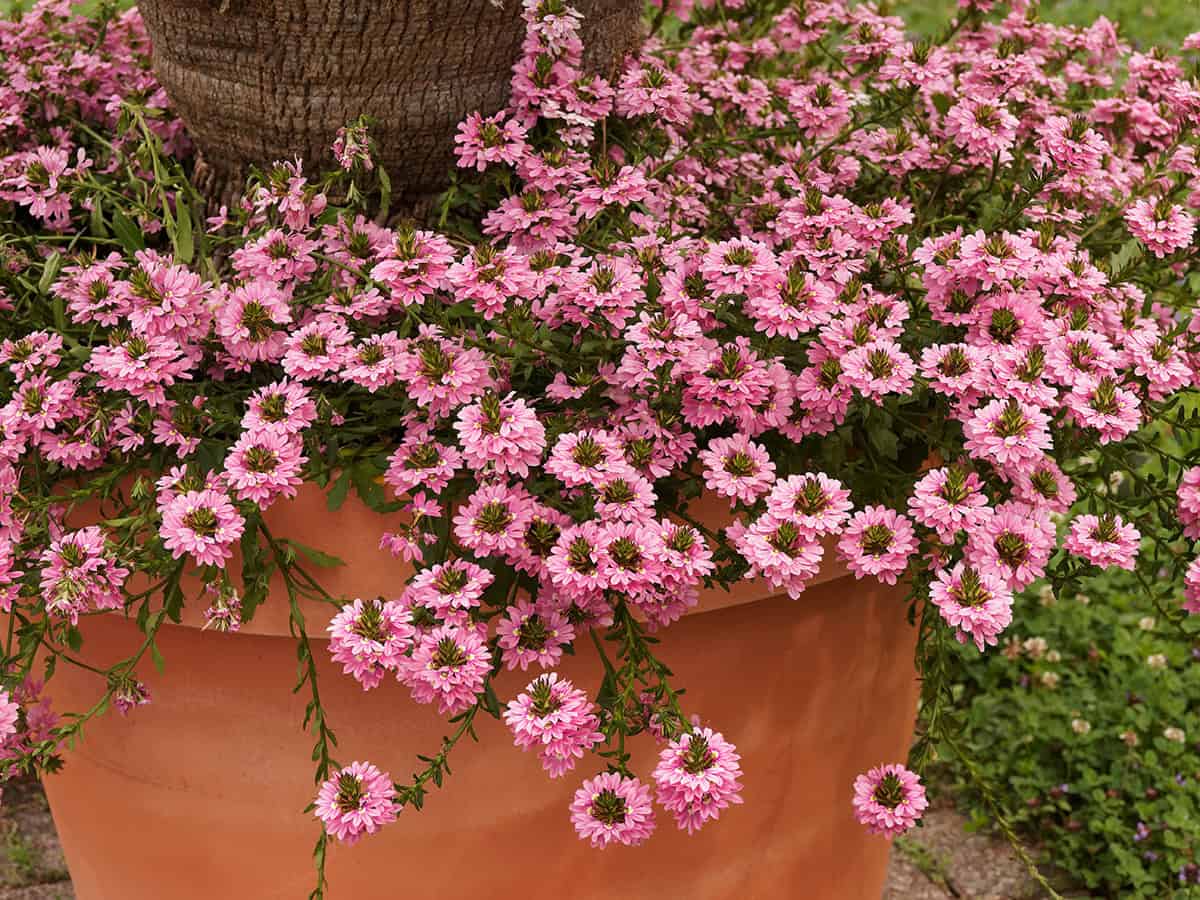
Scaevola, or fan flower, trails stems covered in half-round, fan-shaped flowers in blue, purple or white. It handles heat, sun and humidity, and it blooms all season with no deadheading needed. Water moderately and feed every few weeks for the fullest baskets and mixed planters.