Clay soil holds water and nutrients well, and the trouble comes from how slowly it drains and how hard it packs down in summer.
Ground covers that spread by shallow runners or rhizomes cope well with those conditions, and a few inches of compost mixed into the top layer at planting speeds them along.
Two of the 20, bishop’s weed and creeping buttercup, come with a strong warning, and their entries spell out why before anything goes in the ground.
Table of Contents
- Hardy Ground Cover Plants That Tolerate Clay Soil
- Ajuga (Ajuga reptans)
- Vinca Minor (Periwinkle)
- Pachysandra (Pachysandra terminalis)
- Creeping Jenny (Lysimachia nummularia)
- Lamium (Lamium maculatum)
- Sweet Woodruff (Galium odoratum)
- Liriope (Liriope muscari)
- Mondo Grass (Ophiopogon japonicus)
- Hardy Geranium (Geranium macrorrhizum)
- Creeping Mazus (Mazus reptans)
- Lily Of The Valley (Convallaria majalis)
- Wild Ginger (Asarum canadense)
- Epimedium (Barrenwort)
- Tiarella (Foamflower)
- Carex (Ornamental Sedges)
- Bishop’s Weed (Aegopodium podagraria)
- Green and Gold (Chrysogonum virginianum)
- Golden Ragwort (Packera aurea)
- Partridgeberry (Mitchella repens)
- Creeping Buttercup (Ranunculus repens)
Hardy Ground Cover Plants That Tolerate Clay Soil
Clay holds water, compacts easily and warms slowly in spring. These plants cope with all three, and they spread to cover bare spots and block weeds in sun or shade.
Ajuga (Ajuga reptans)
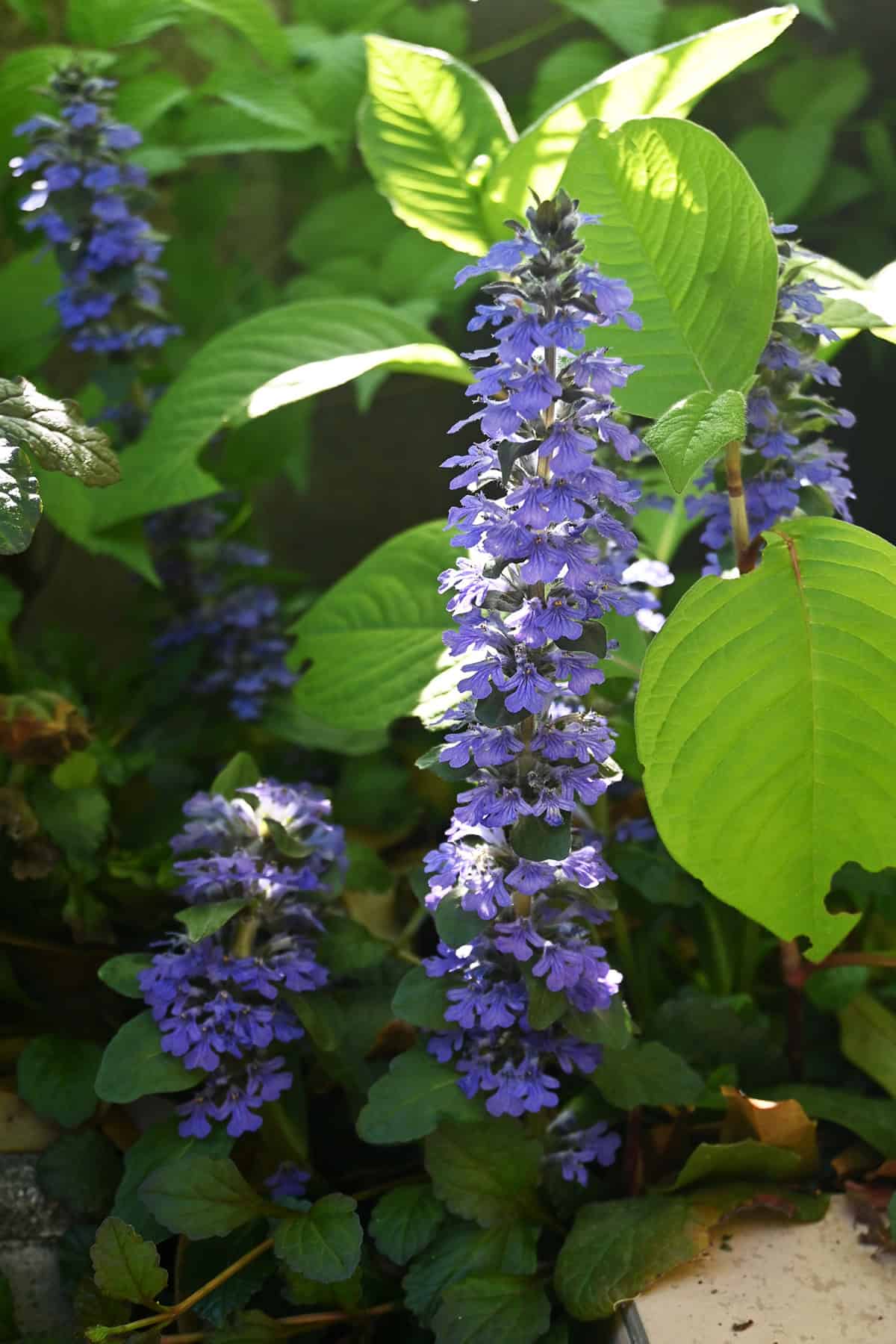
Ajuga fills in quickly where the soil is heavy and water lingers, and short runners weave a mat even across dense clay.
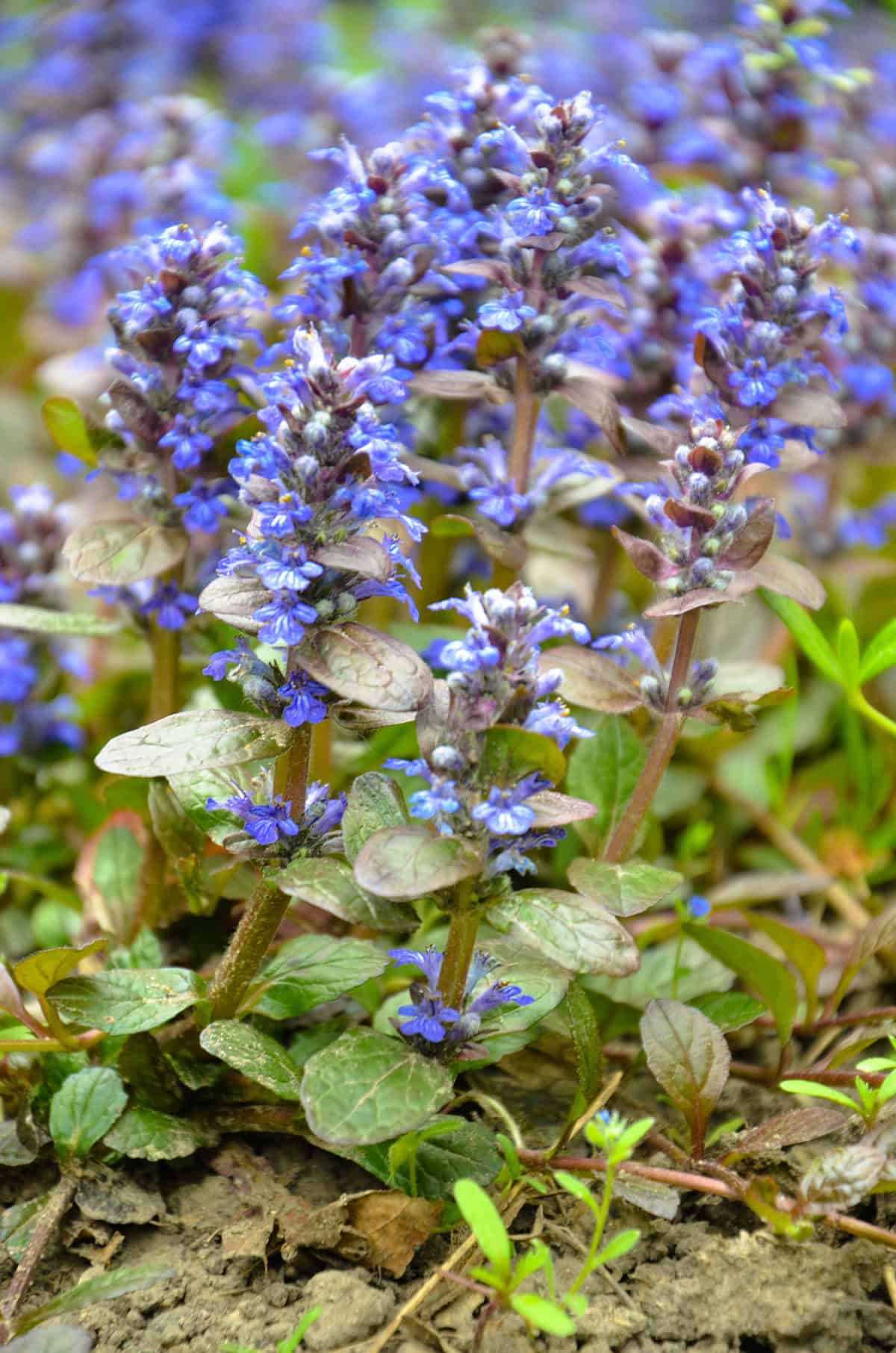
Leaves range from green to deep purple, and blue flower spikes in spring draw pollinators.
It grows in sun or partial shade, provided the ground drains within a day or so after rain. Snip off spent flower stalks for a tidy look and to limit self-seeding.
Vinca Minor (Periwinkle)
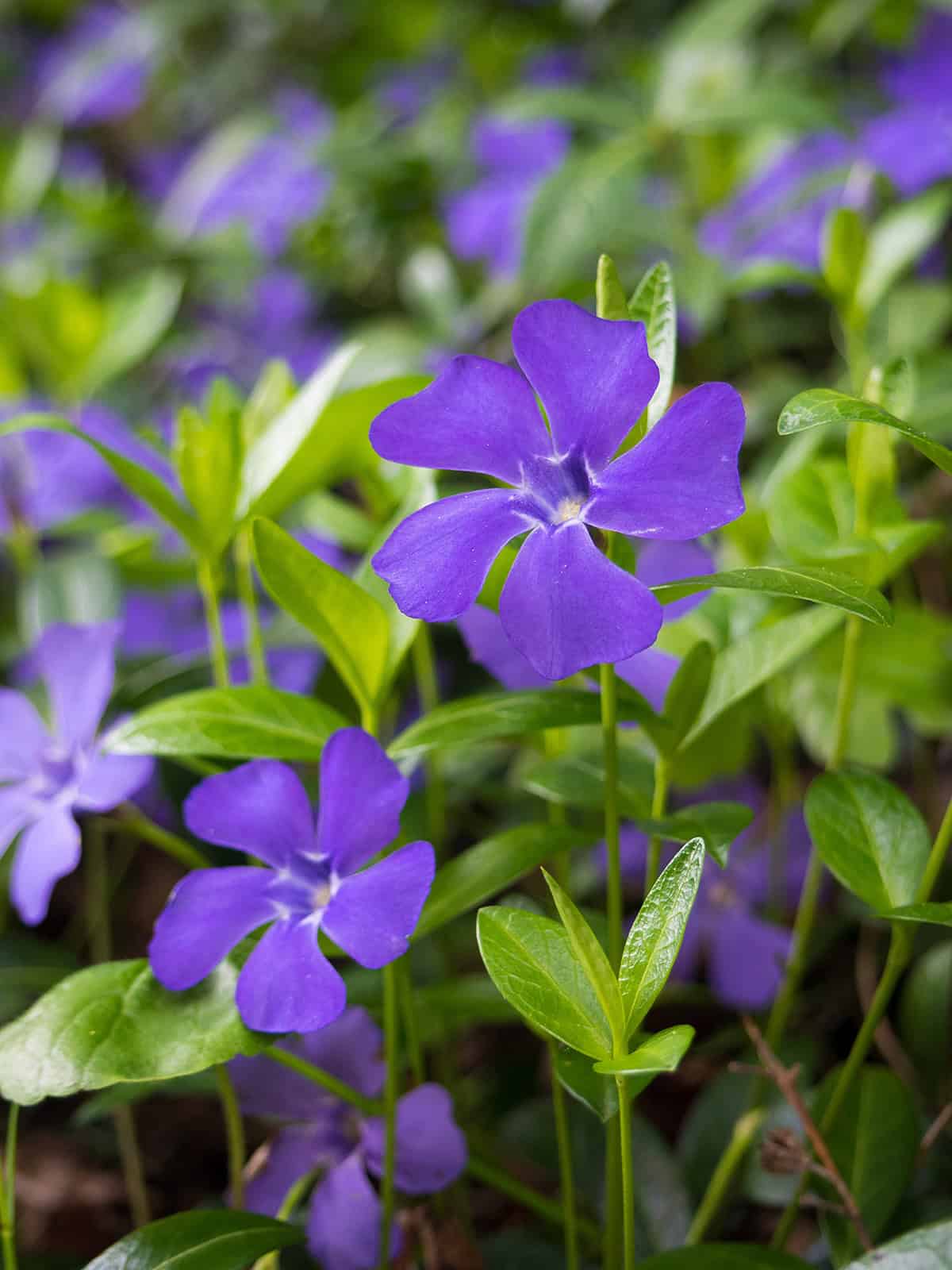
Once established, periwinkle forms a thick evergreen blanket that protects slopes from washing out.
Partial to full shade is ideal. Blue or violet flowers appear in spring, with a few more in summer in some years.
The roots establish in clay once the top layer is loosened. Its creeping stems root wherever they touch, so allow room for spread. It resists deer and handles dry shade once established, though it is invasive in parts of North America.
Pachysandra (Pachysandra terminalis)
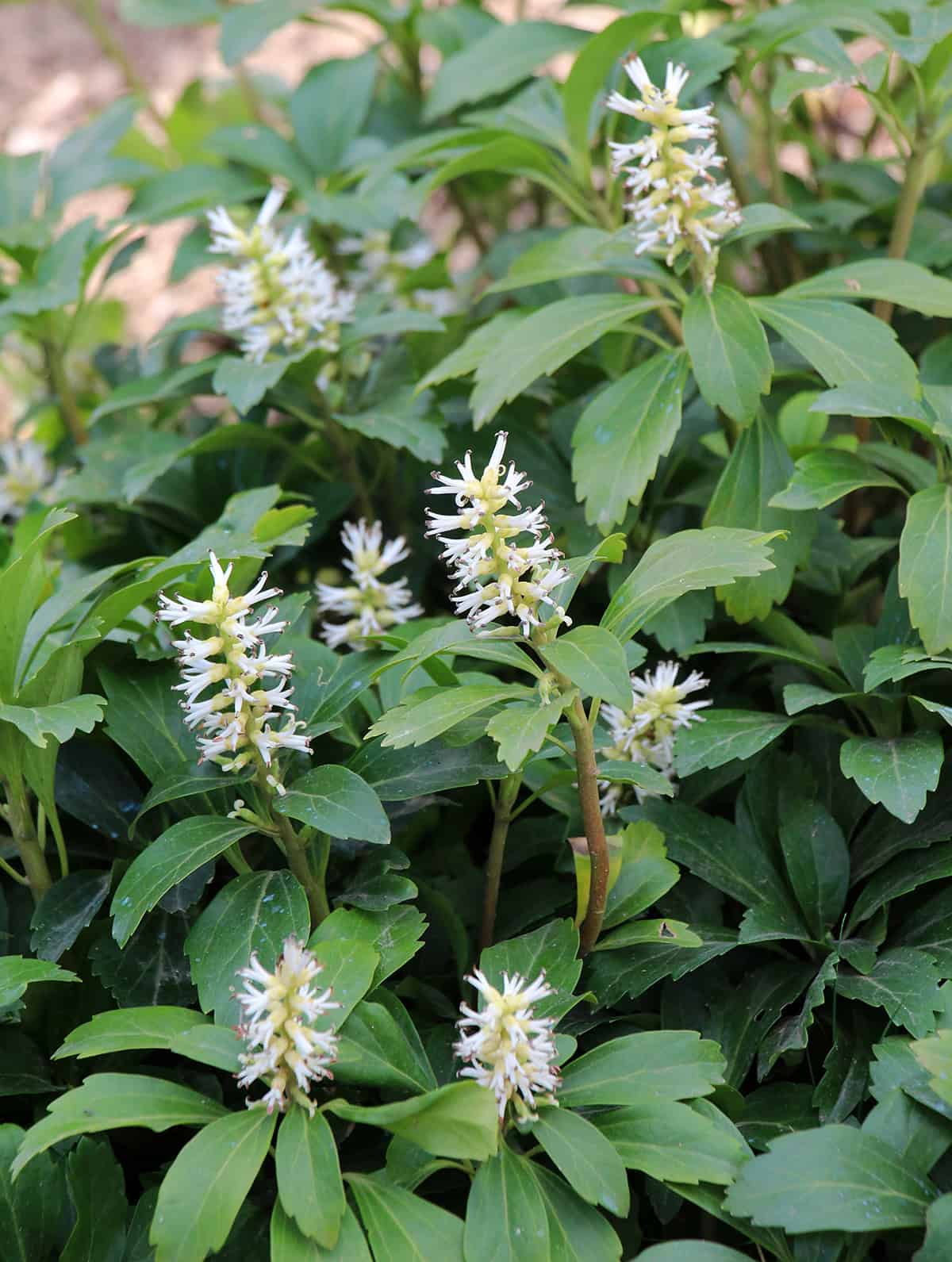
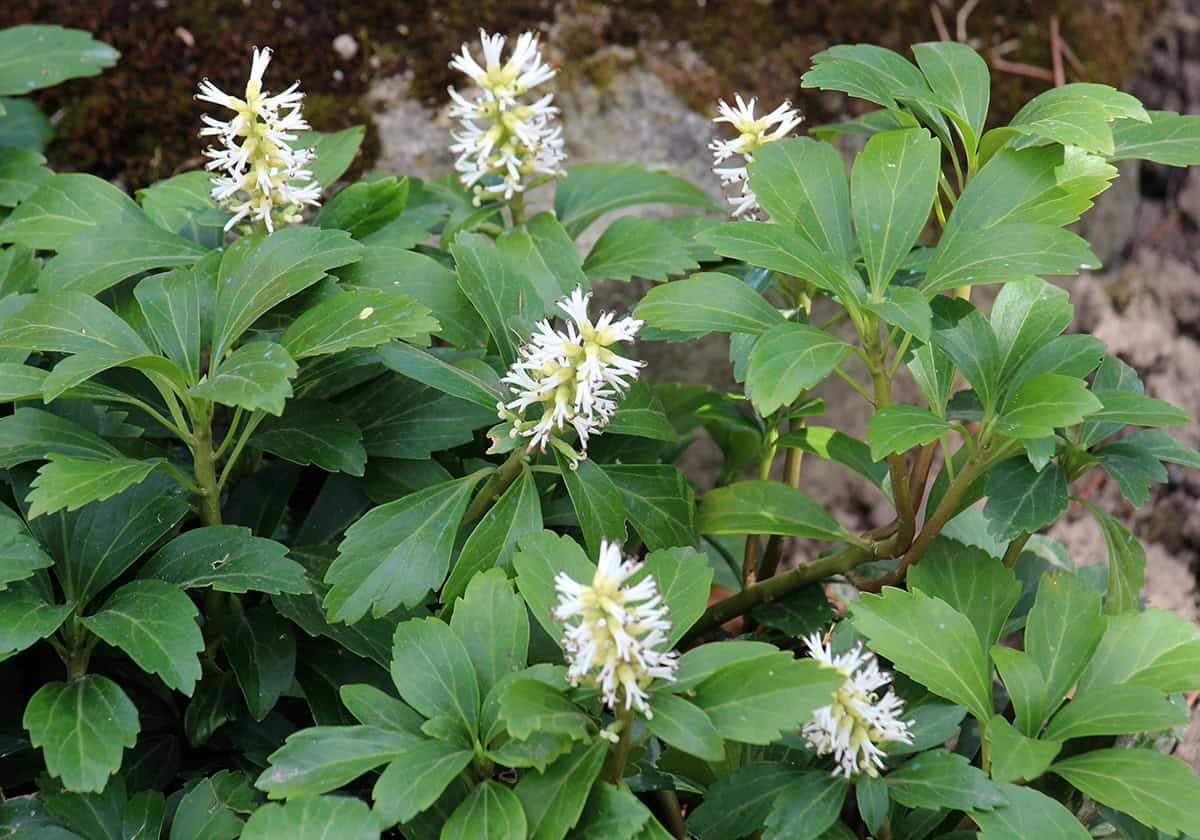
Pachysandra steps in where deep shade, stubborn clay and tree roots defeat grass.
Thick, glossy leaves persist through winter in many climates. Small white flowers appear in spring, though the foliage is the main draw.
It prefers moist clay enriched with compost, and close planting produces a solid carpet. Hot, full sun scorches and thins the leaves. Japanese pachysandra spreads into woodlands in parts of the eastern US, where native Allegheny spurge is the safer choice.
Creeping Jenny (Lysimachia nummularia)
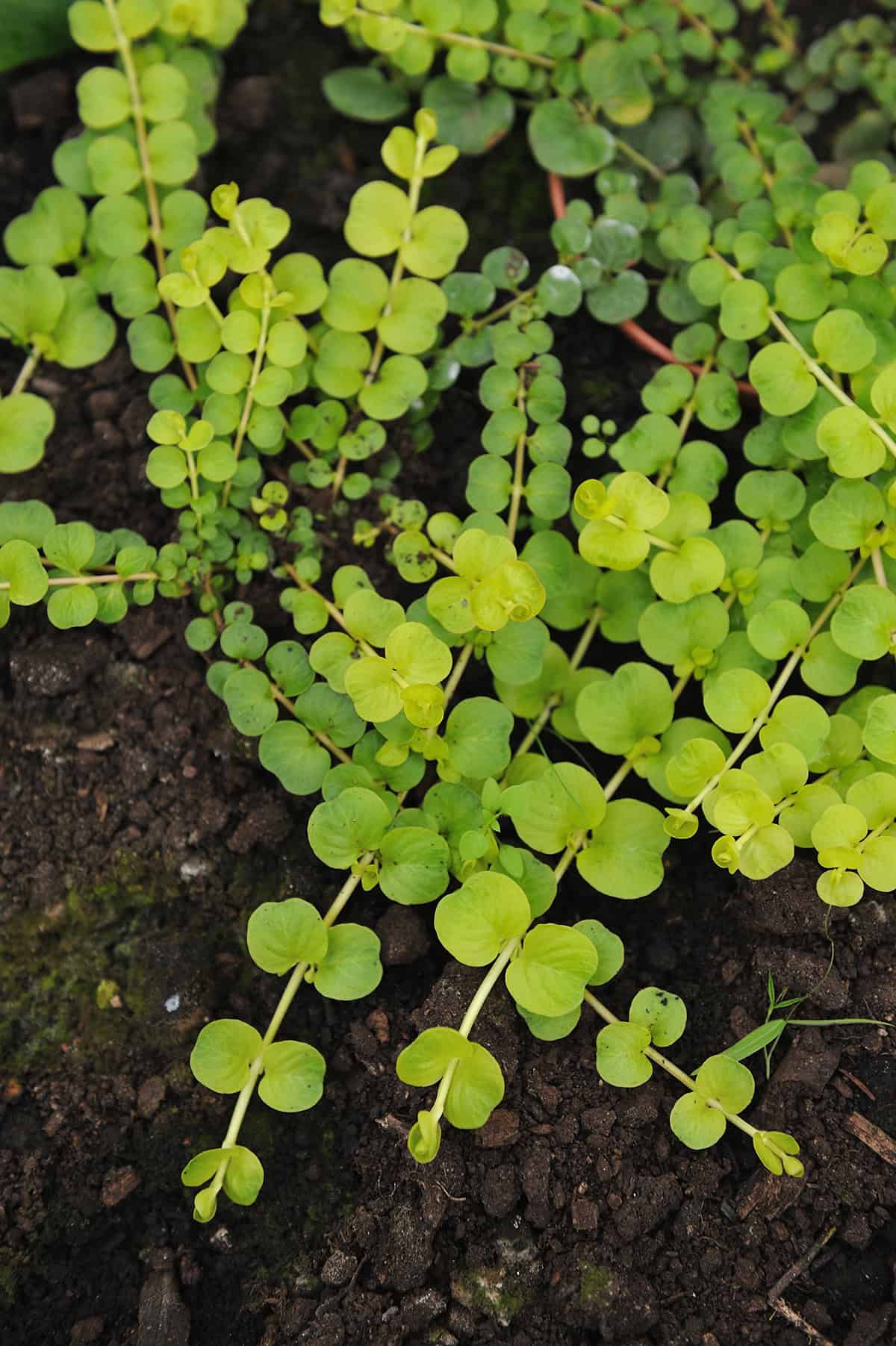
Bright green or golden coin-shaped leaves trail across damp clay and handle wet spells easily.
It grows in sun or partial shade, and cheerful yellow flowers appear in early summer.
It spreads fast and roots wherever stems touch the ground. Edging and regular trimming prevent it from swamping neighbors, and it is invasive in some regions, especially near wetlands.
Lamium (Lamium maculatum)
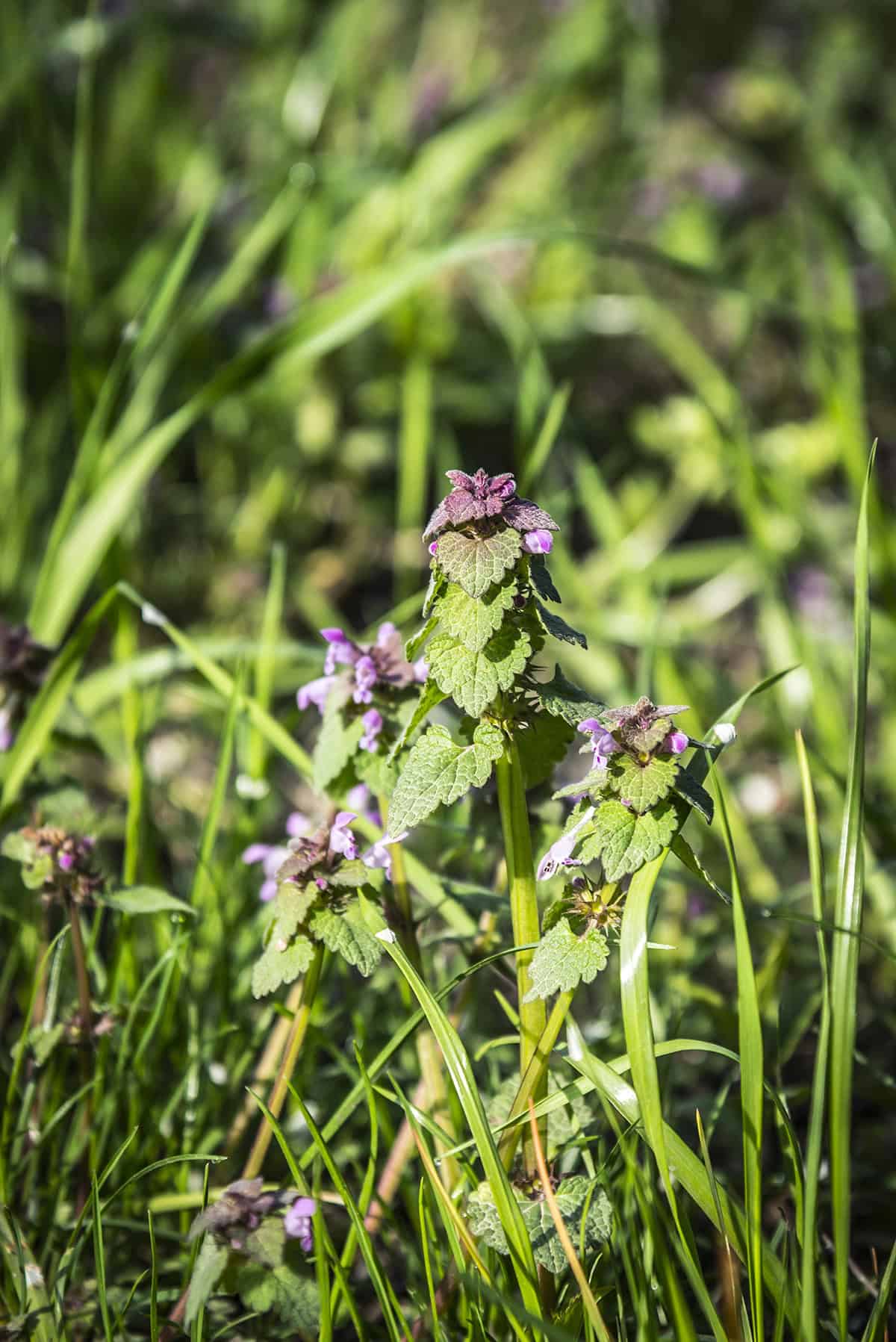
Silver-splashed leaves brighten shaded clay beds, and the shallow roots handle dense soil.
Pink, purple or white flowers appear in spring and repeat in some years. Shade is where it performs best.
Consistent moisture produces the best growth. Trim after flowering to refresh the foliage, and allow air movement to prevent leaf spots.
Sweet Woodruff (Galium odoratum)
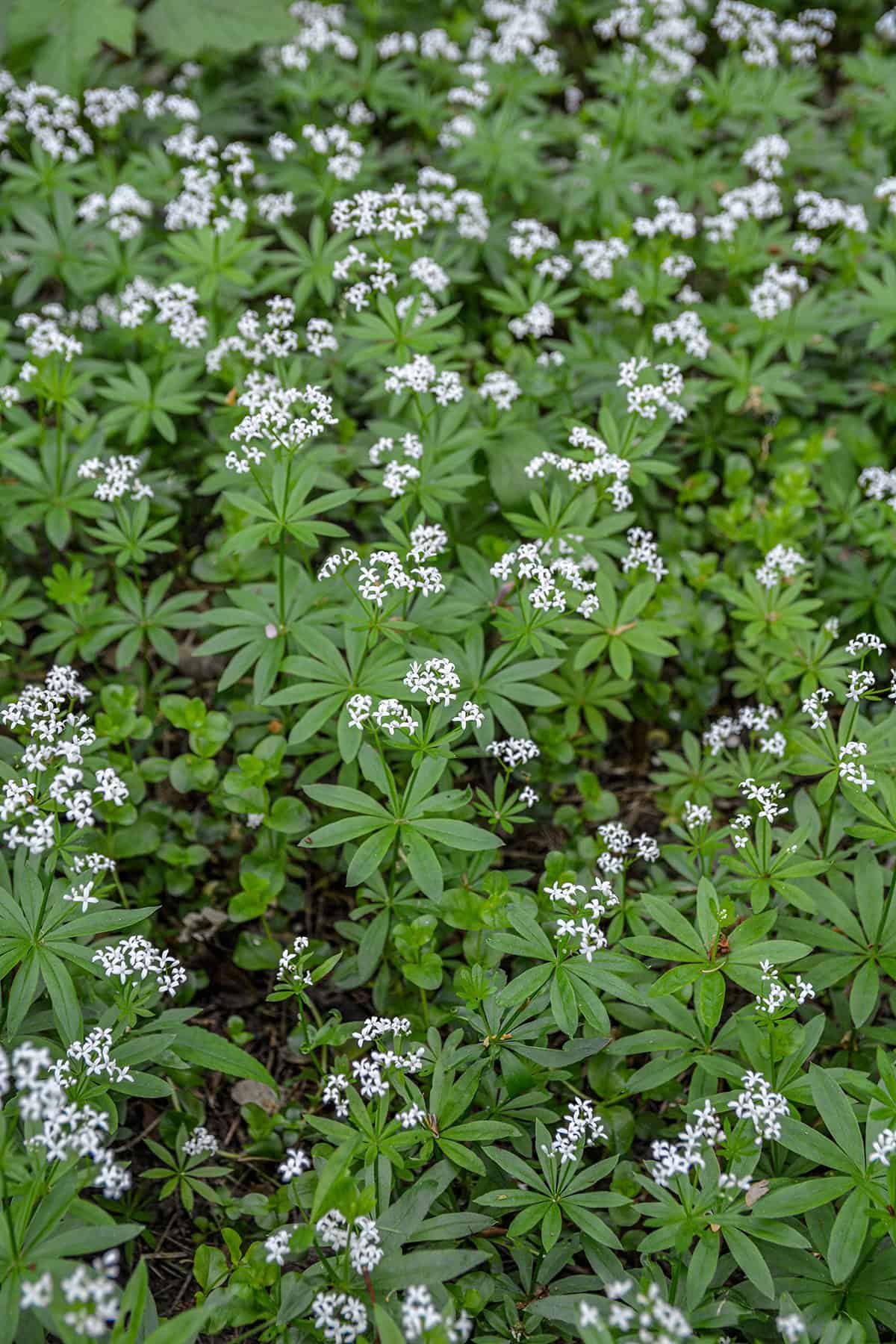
Cool, shaded clay under trees is ideal ground for this soft, whorled ground cover.
Tiny white flowers appear in late spring, and the leaves release a sweet, hay-like scent when crushed or dried.
It prefers moist clay improved with compost, and established plants handle brief dry spells. It spreads steadily by shallow runners, quickly in moist soil, so edge it where it meets other plantings.
Liriope (Liriope muscari)
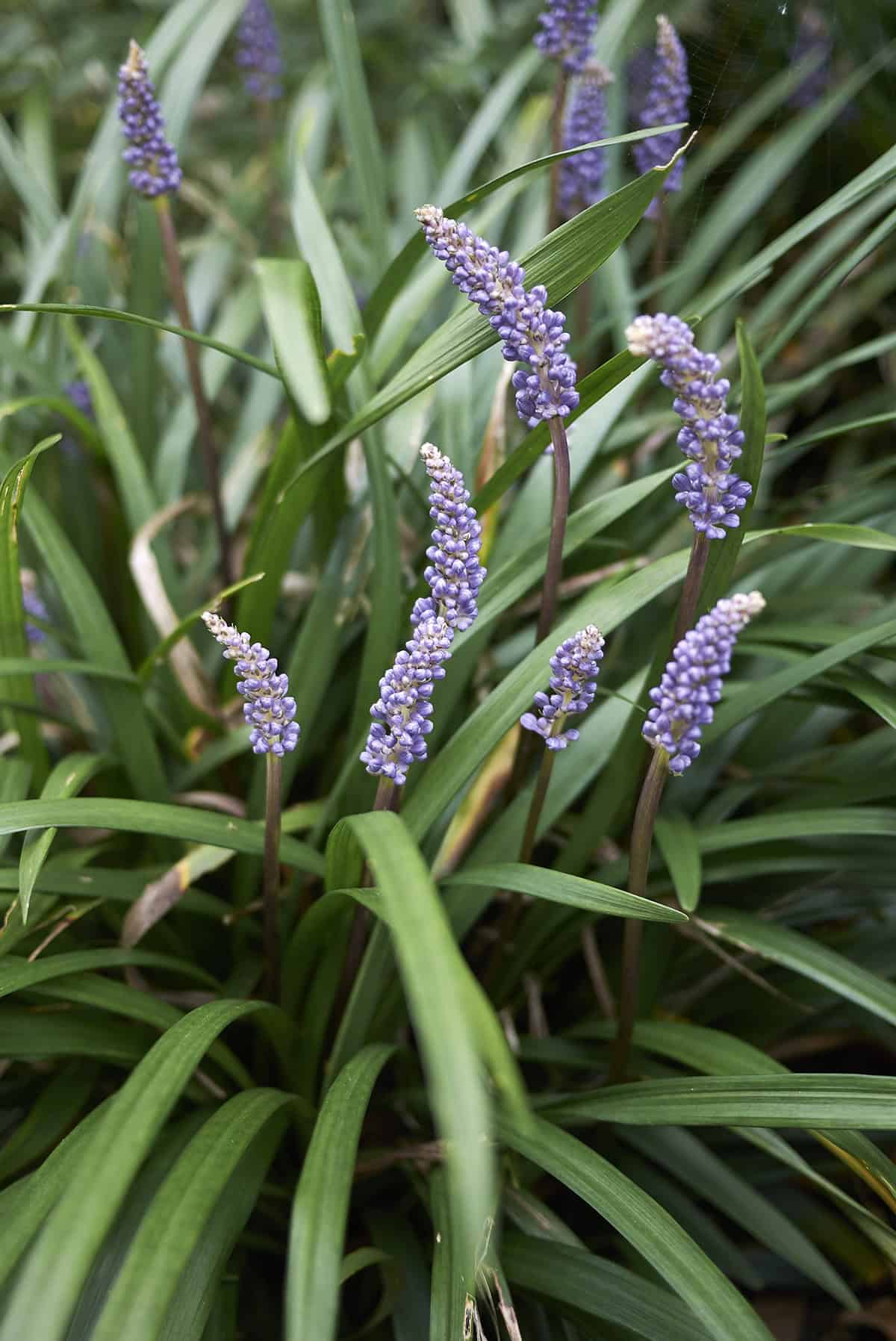
Strappy liriope leaves line up neatly in unruly clay beds, and the plant is far less fussy than most ornamental grasses.
Purple or lavender flower spikes rise in late summer, followed by dark berries in fall.
It adapts to sun or shade as long as water drains within a day. Cut back old leaves in early spring before new growth starts. Choose clump-forming Liriope muscari, since creeping lilyturf (Liriope spicata) spreads aggressively.
Mondo Grass (Ophiopogon japonicus)
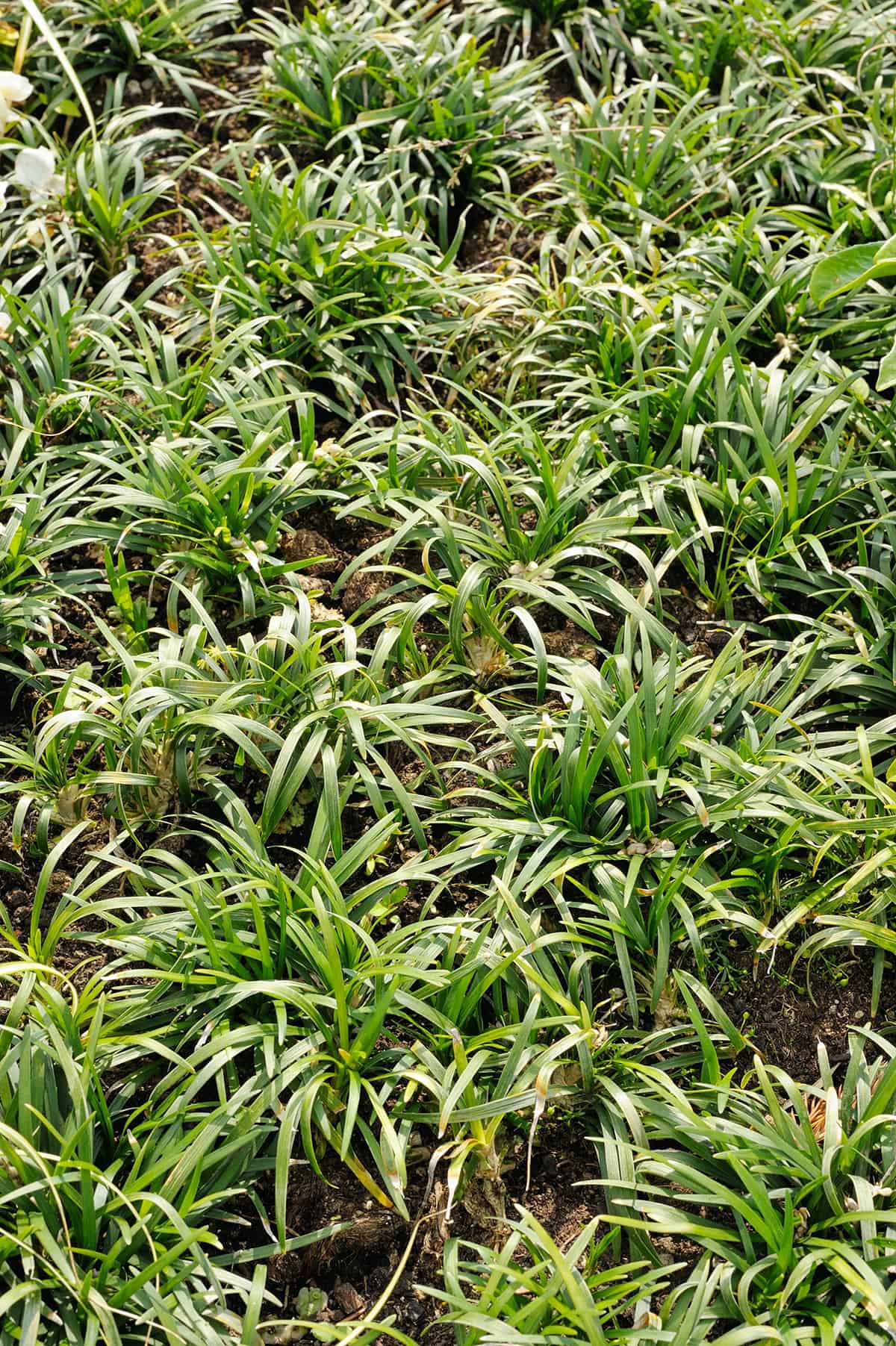
Mondo grass forms a tidy, grassy edge along borders and paths, and slow-draining clay is fine unless it sits waterlogged.
Narrow leaves form dense clumps, and small pale flowers in summer lead to dark blue berries.
Partial to full shade is best. Plant closely for a quick fill, and divide crowded clumps every few years.
Hardy Geranium (Geranium macrorrhizum)
Heavy clay and dry shade barely trouble this perennial, which spreads by rhizomes into a thick, weed-suppressing mat.
The aromatic leaves color red or bronze in fall, and pink or magenta flowers open in late spring.
It fits under shrubs and along borders, and deer tend to avoid it. Trim after flowering for a neater look.
Creeping Mazus (Mazus reptans)
For moist clay between stepping stones or along paths, mazus forms a low, tight mat.
Purple or blue flowers cover it in late spring.
It grows in sun or partial shade and needs steady moisture. Avoid heavy foot traffic, since the stems bruise easily.
Lily Of The Valley (Convallaria majalis)
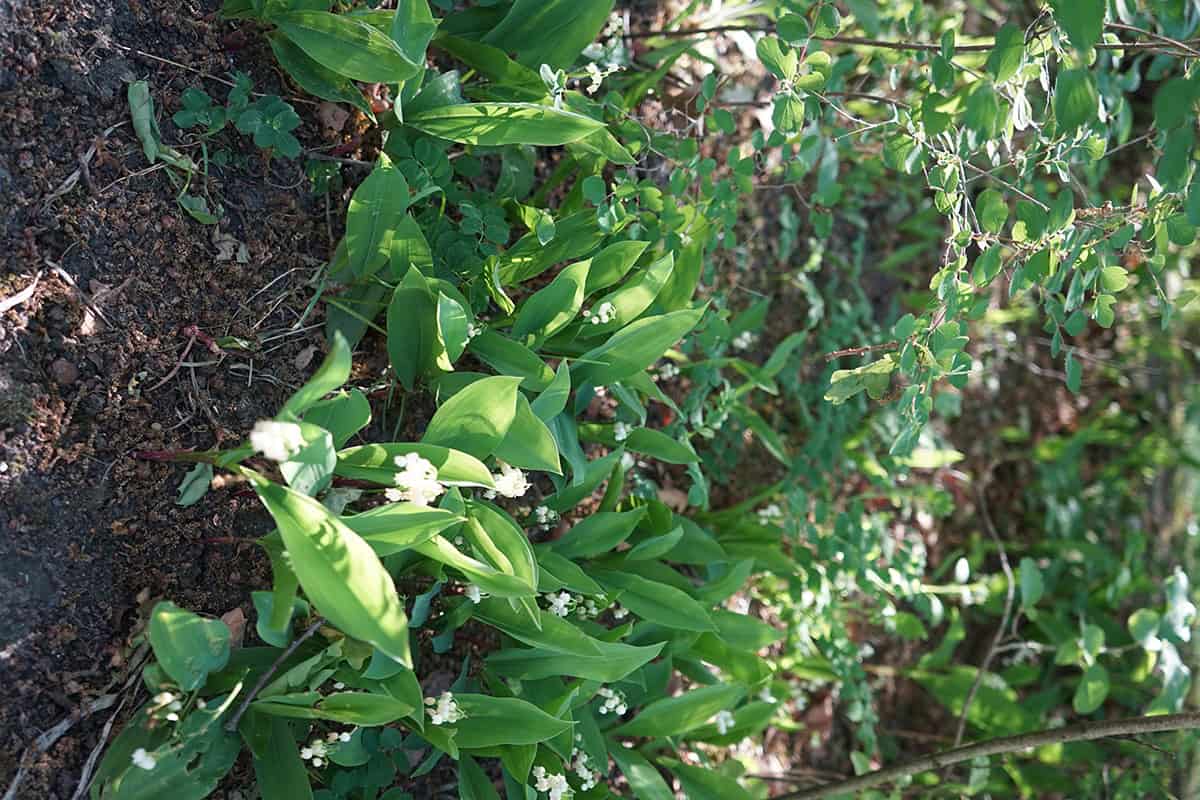
Dense, shaded clay poses no problem for this rhizome-spreader, which forms long-lived colonies over time.
Arching stems of fragrant white bells appear in spring, and the upright leaves last through summer.
Full to partial shade is ideal, along with moist soil. Every part of the plant is toxic, so plant it away from children and pets.
Wild Ginger (Asarum canadense)
Heart-shaped, velvety leaves of wild ginger form a low, dense cover in moist, shaded clay. This North American native spreads slowly by rhizomes into lasting colonies.
Small, maroon, jug-shaped flowers hide beneath the leaves at ground level in early spring.
It grows best in partial to full shade with steady moisture and soil improved with leaf compost. The leaves die back in winter, and deer leave it alone.
Epimedium (Barrenwort)
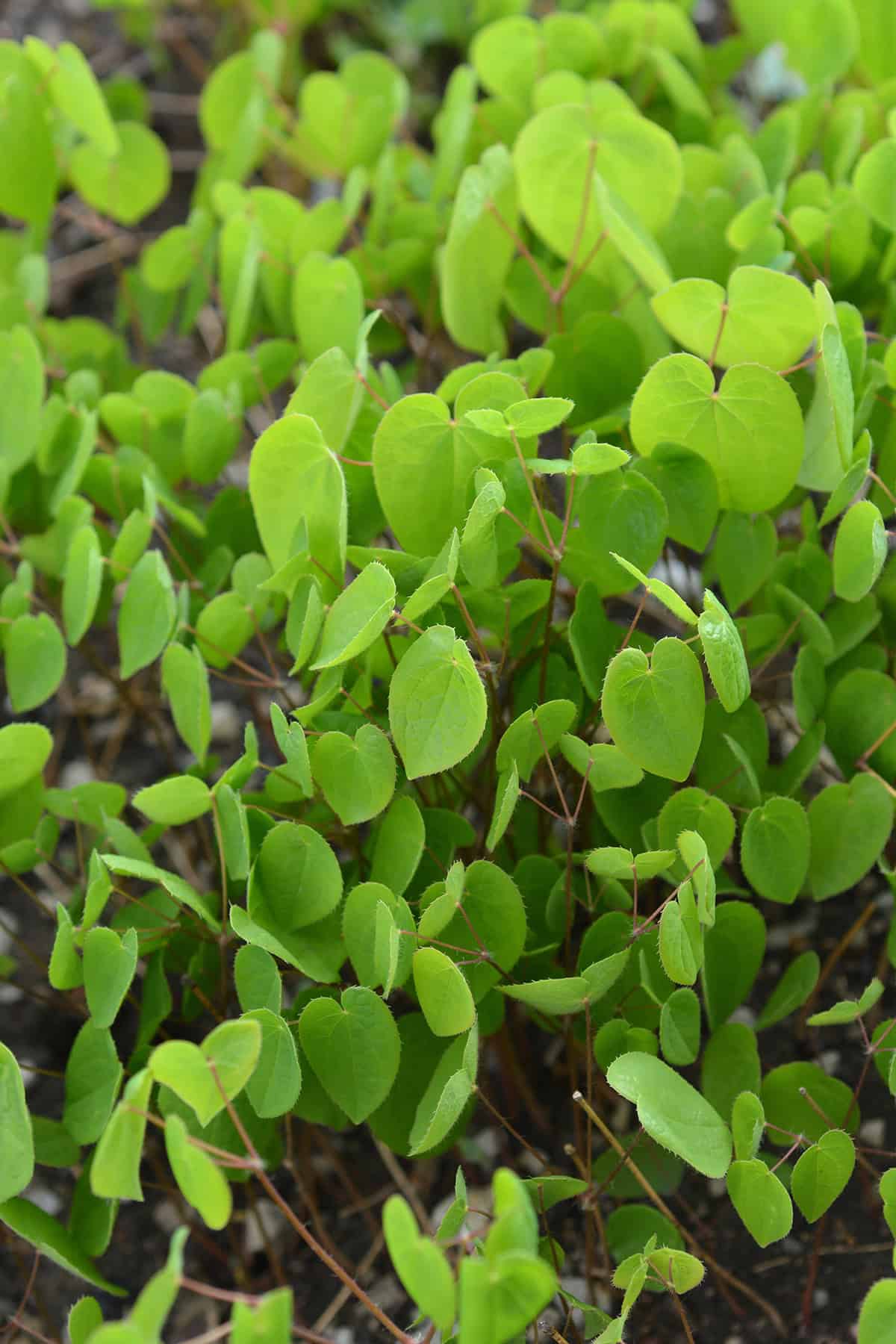
Epimedium carries on in dry shade and stubborn clay under trees.
Heart-shaped leaves emerge with bronze tints in spring, and delicate yellow, pink or white flowers hover above them.
Partial to full shade is best, and compost mixed in at planting helps. Established plants handle summer drought better than most ground covers.
Tiarella (Foamflower)
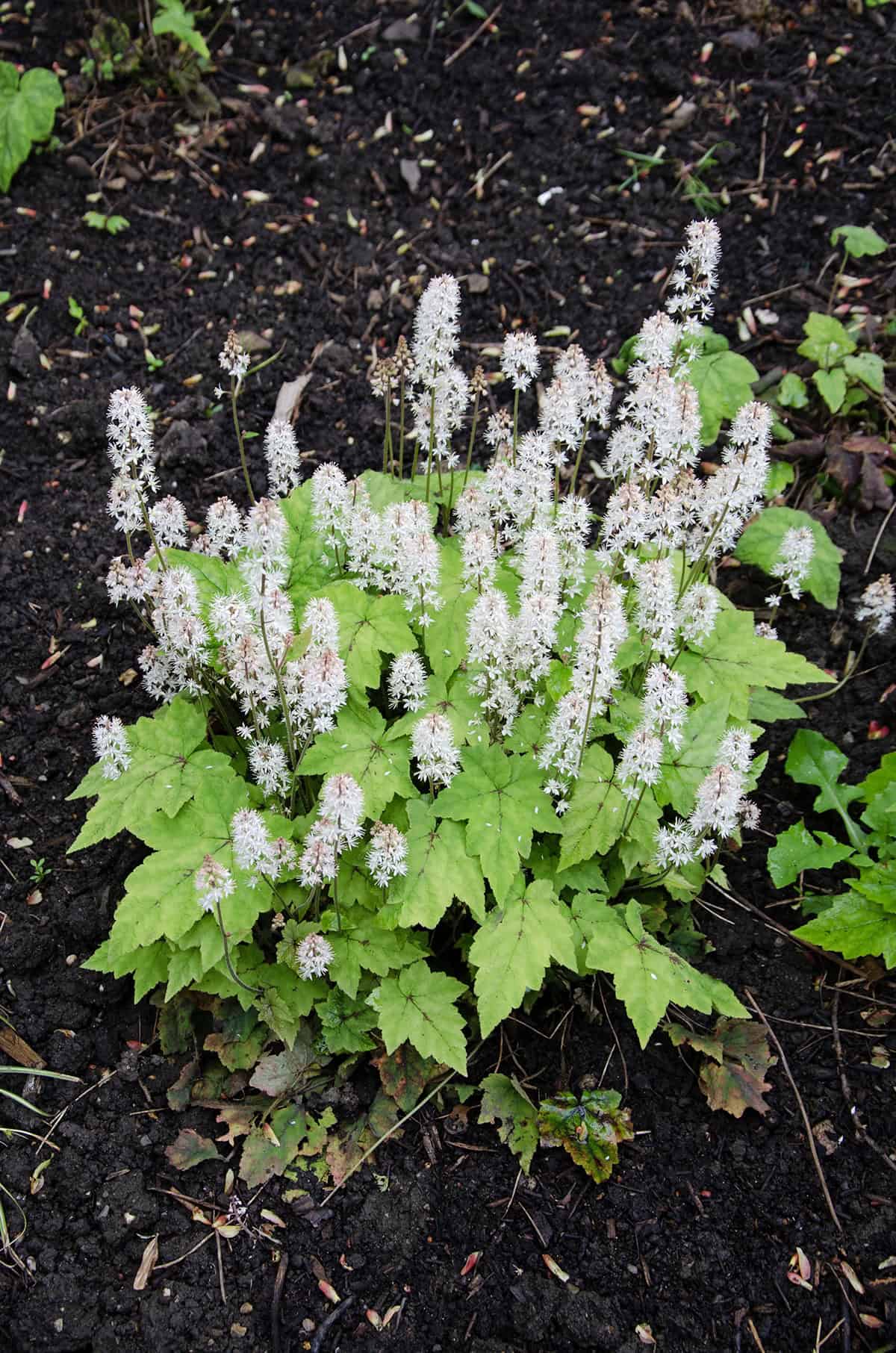
In woodland clay with steady moisture, foamflower spreads by short runners into loose, soft clumps.
Airy white or pale pink flower spikes appear in spring, and the leaves carry dark veins or centers in many varieties.
Partial to full shade is ideal. Water for evenly moist, never soggy, soil, and divide every few years for thick coverage.
Carex (Ornamental Sedges)
Many ornamental sedges handle heavy clay and occasional wet spells, and a species exists for most spots in sun or shade.
Grassy leaves in green, blue or variegated forms grow in clumps or slow-spreading colonies.
Choose species adapted to your region. Most prefer moist conditions and handle compaction better than lawn grass. Trim old growth in early spring if needed.
Bishop’s Weed (Aegopodium podagraria)
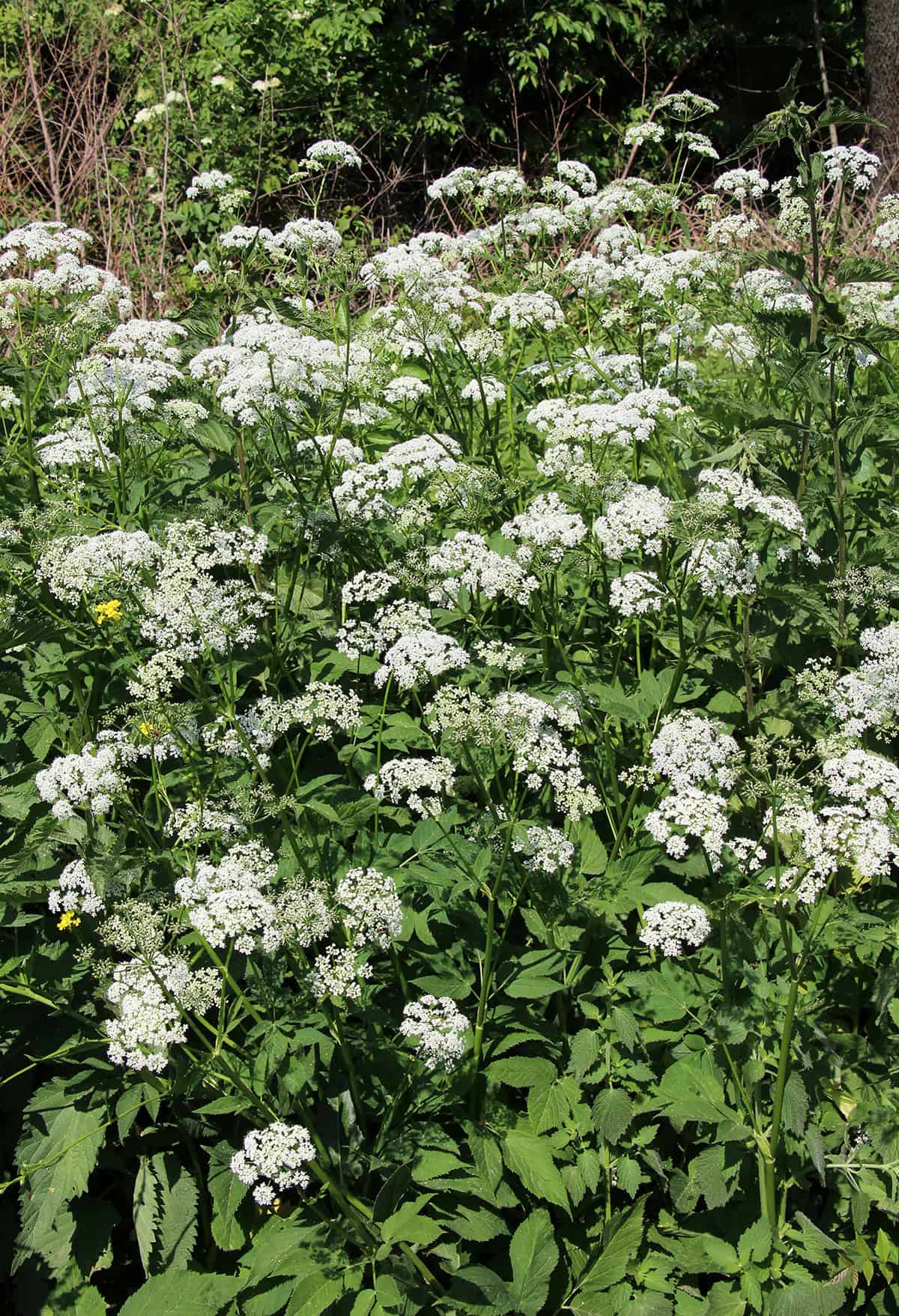
Bishop’s weed spreads aggressively, so plant it only where firm boundaries contain it.
Variegated leaves brighten shade, and clusters of small white flowers appear in early summer.
Partial to full shade is fine. Its roots race through clay, so install deep barriers to protect other beds and lawns. It is invasive in much of North America, and many gardeners regret planting it, so consider it only for an enclosed bed.
Green and Gold (Chrysogonum virginianum)
This native of the eastern United States forms a low mat of fuzzy green leaves dotted with bright yellow, star-shaped flowers.
Flowers appear from spring into early summer and return lightly through fall in cooler regions.
It tolerates clay that drains reasonably well and grows in partial shade to sun. Regular water during the first season helps it establish, and older plants spread politely by runners.
Golden Ragwort (Packera aurea)
Golden ragwort thrives in moist woodland clay, which makes it a good choice for rain gardens and low, damp spots.
Bright yellow flowers light up spring, and semi-evergreen leaves form a dense base.
It grows in partial shade, or full sun in cooler regions. It handles wet seasons and holds soil well, and old flower stalks are best removed to limit self-seeding.
Partridgeberry (Mitchella repens)
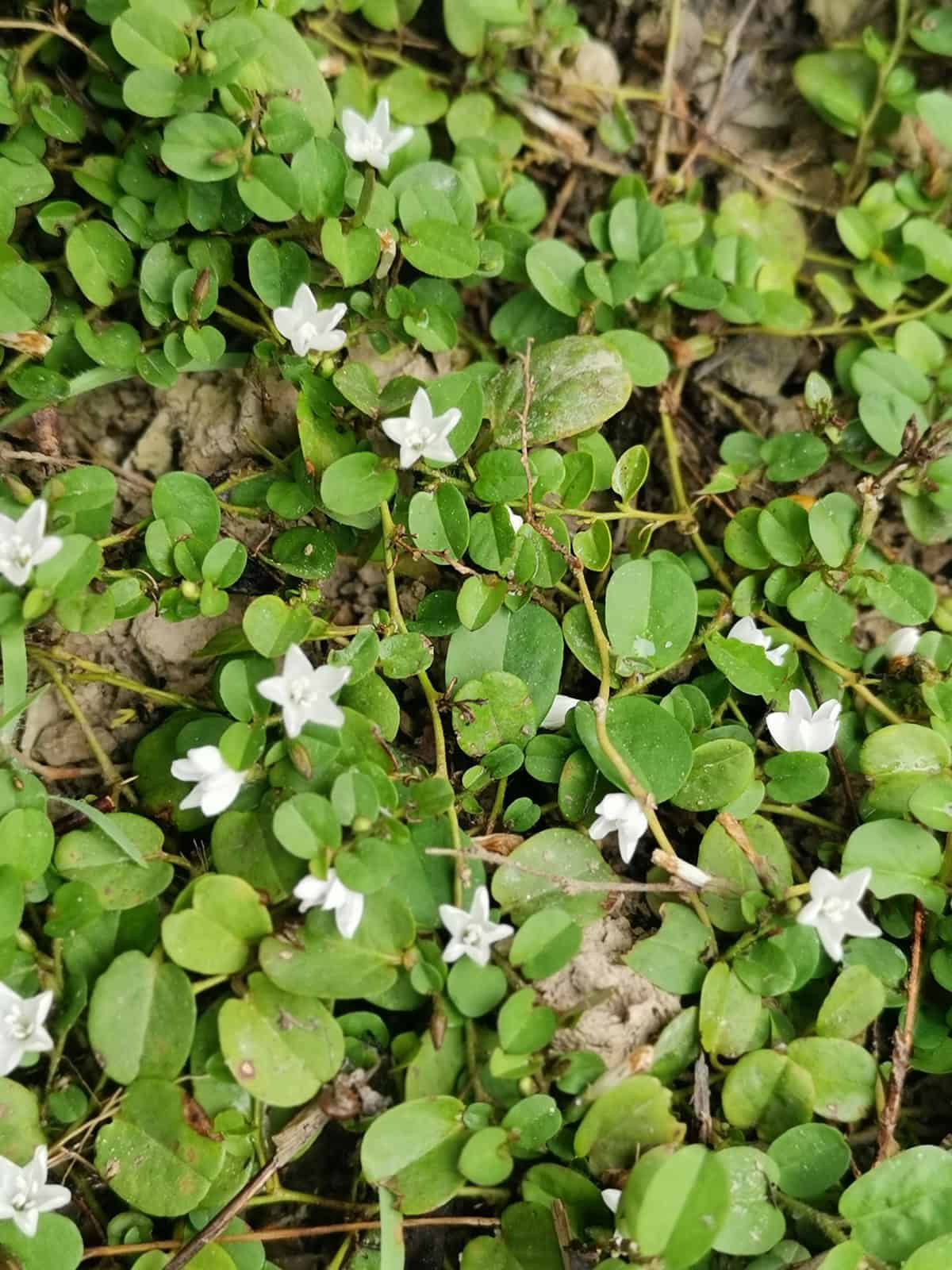
Partridgeberry creeps slowly across acidic, shaded ground under trees and hugs the soil.
Small, fragrant white flowers open in pairs in late spring, and red berries follow and last into winter.
It prefers moist, humus-rich soil and does best in clay amended with plenty of organic matter. Growth is low and tight, so protect it from foot traffic.
Creeping Buttercup (Ranunculus repens)
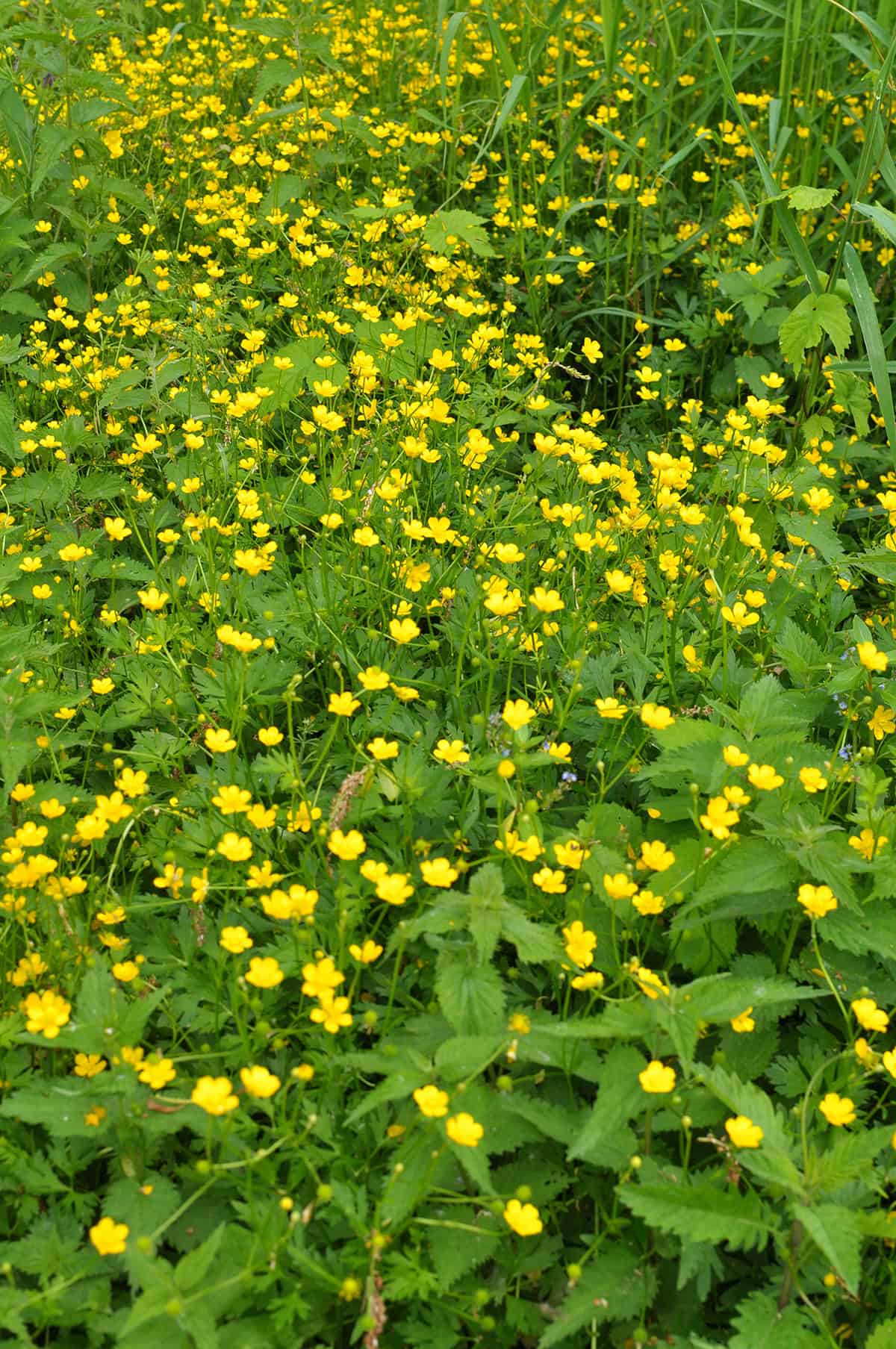
Creeping buttercup thrives in soggy, heavy ground and takes over poorly drained lawns, which is why it appears here as a warning more than a recommendation.
Shiny yellow flowers appear in spring and early summer, and the stems root wherever they touch the soil, so new plants multiply fast.
Avoid planting it. Better drainage slows its spread, and runners pulled before they root limit new patches. Native alternatives such as golden ragwort or green and gold cover damp clay with far less risk.