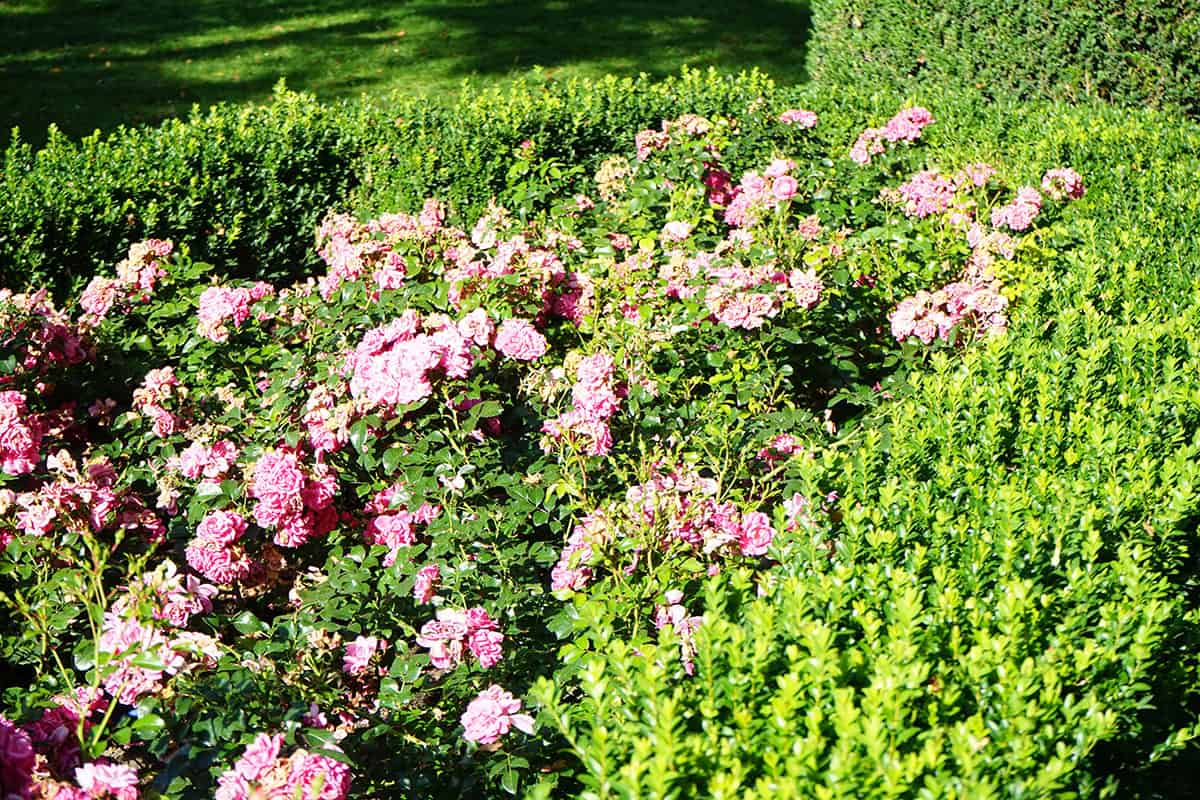
Ground covers earn their place in the spots where lawn grass struggles, such as dry slopes, cracks between pavers and the shade under trees. Most grow under a foot tall and bloom for weeks.
Light and drainage decide which ones succeed. A handful of fast spreaders here, periwinkle and creeping Jenny among them, also carry a warning about invasiveness in parts of North America.
Table of Contents
- Flowering Ground Cover Plants
- Creeping Thyme (Thymus serpyllum)
- Moss Phlox (Phlox subulata)
- Creeping Phlox (Phlox stolonifera)
- Periwinkle (Vinca minor)
- Ajuga / Bugleweed (Ajuga reptans)
- Ice Plant (Delosperma cooperi)
- Candytuft (Iberis sempervirens)
- Creeping Jenny (Lysimachia nummularia)
- Snow-In-Summer (Cerastium tomentosum)
- Rock Cress (Aubrieta deltoidea)
- Creeping Mazus (Mazus reptans)
- Blue Star Creeper (Isotoma fluviatilis)
- Sedum / Stonecrop (Sedum spurium, Sedum acre)
- Basket Of Gold (Aurinia saxatilis)
- Hardy Geranium (Geranium sanguineum)
- Creeping Speedwell (Veronica repens)
- Serbian Bellflower (Campanula poscharskyana)
- Trailing Verbena (Verbena canadensis)
- Helianthemum (Rock Rose)
- Creeping Cinquefoil (Potentilla reptans)
- Sweet Alyssum (Lobularia maritima)
- Alpine Aster (Aster alpinus)
- Dianthus (Low-Growing Varieties)
- Erigeron (Mexican Fleabane – Erigeron karvinskianus)
- Phlox douglasii (Douglas Moss Phlox)
Flowering Ground Cover Plants
These spreaders fill gaps with dense foliage and seasonal flowers. They suppress weeds, soften hard edges and hold soil on slopes.
Creeping Thyme (Thymus serpyllum)
Creeping thyme forms a fragrant mat in sunny spots with gritty, well-drained soil. Most types grow under 4 inches tall and spread steadily, and they fit between stepping stones where foot traffic is light.
Pink or purple flowers cover the plants in early to midsummer, and the leaves release their scent when brushed. Bees visit constantly.
Established plants handle drought well, and wet, heavy soil rots them. Trim after flowering for a tidy mat.
Moss Phlox (Phlox subulata)
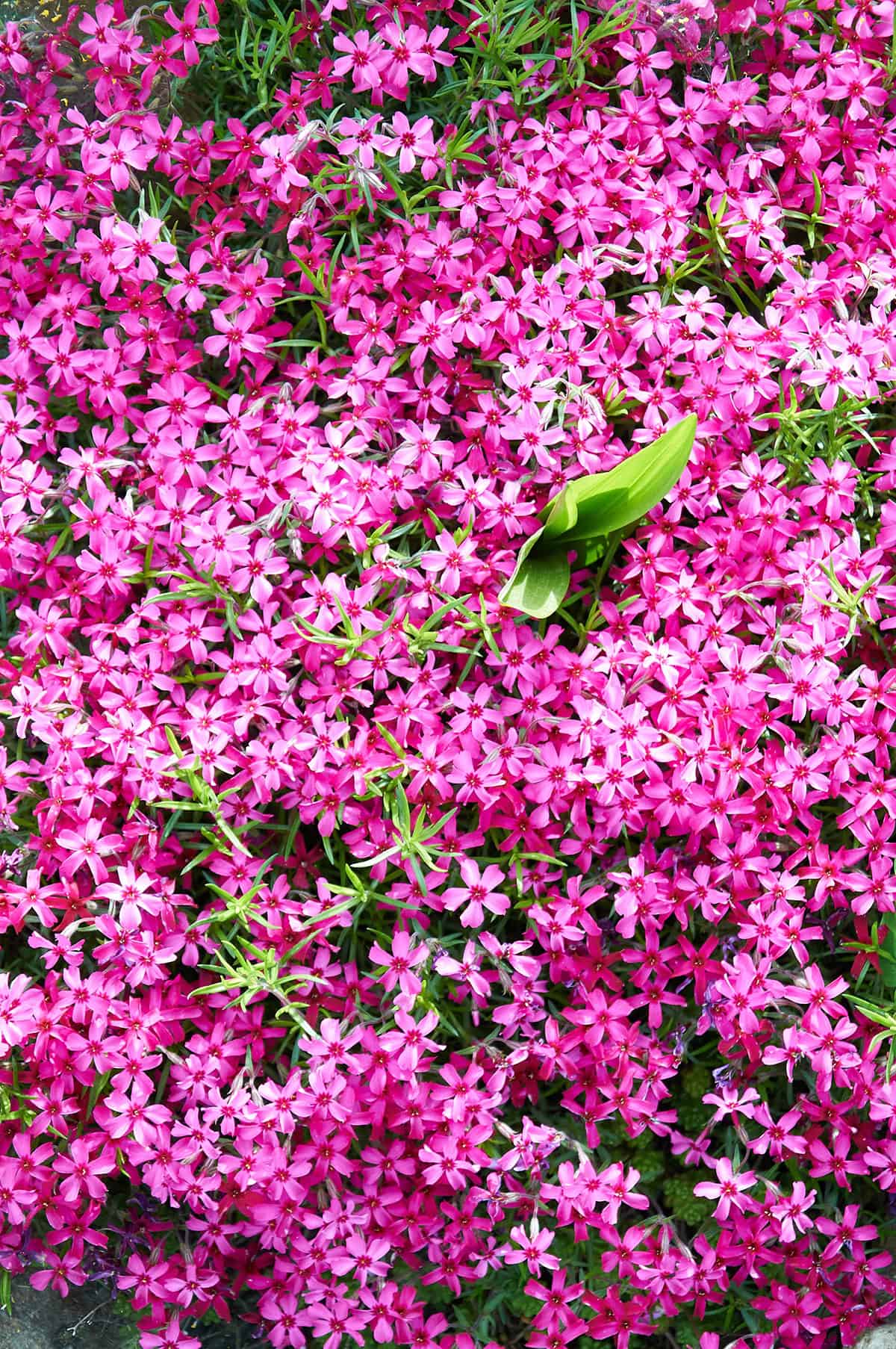
Moss phlox holds a low, dense carpet of needle-like evergreen leaves all year and puts on a spectacular show in early spring. Plants grow 4 to 6 inches tall.
Pink, purple, blue or white flowers nearly hide the foliage. It thrives on slopes, in rock gardens and atop retaining walls, and sandy, poor soil poses no problem.
More sun produces more flowers. Shear lightly after blooming for a neat shape and fresh growth.
Creeping Phlox (Phlox stolonifera)
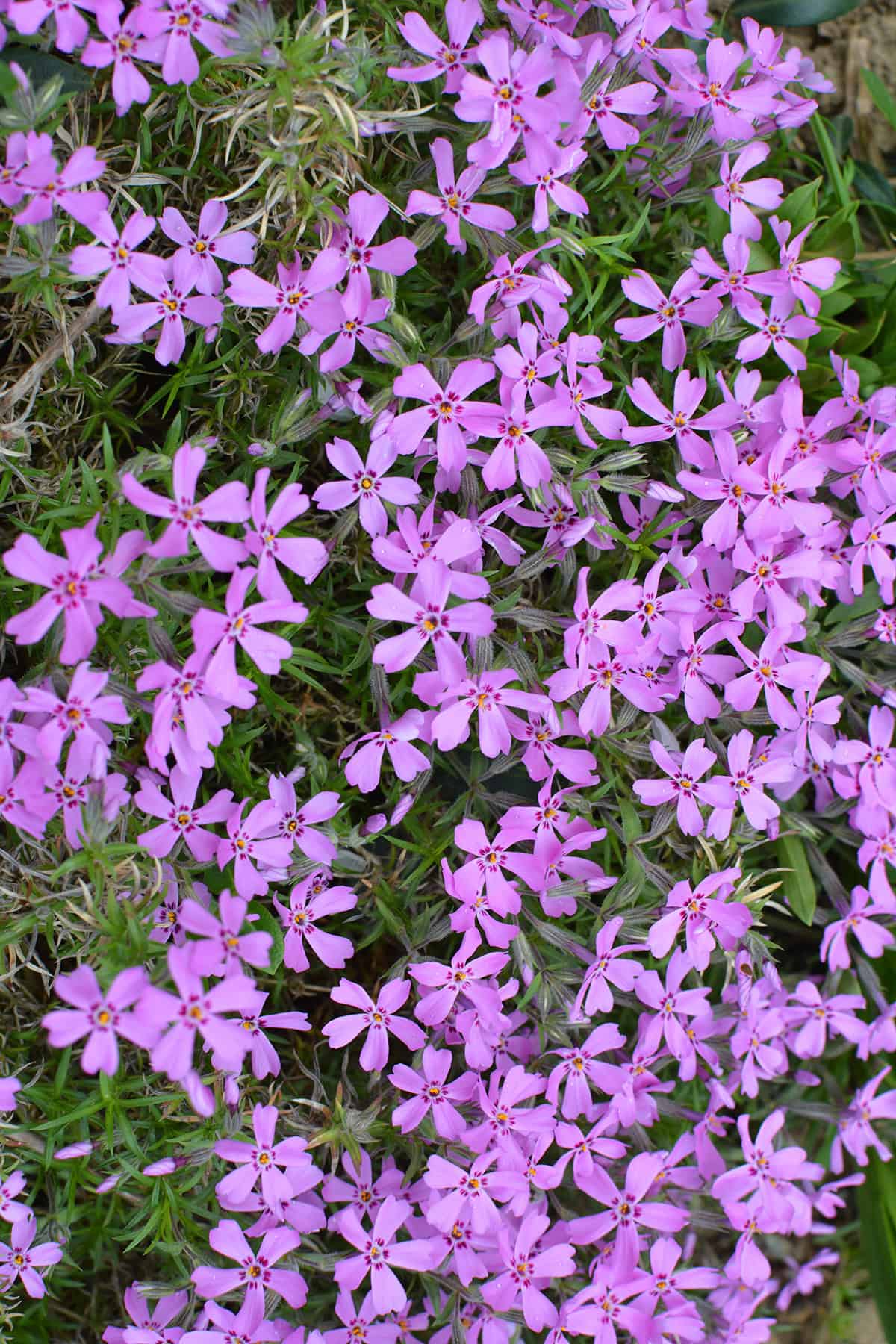
This woodland creeper thrives in dappled shade and spreads by runners into loose mats 6 to 12 inches tall in bloom. Leaves persist through mild winters.
Fragrant blue, lavender or pink flowers rise above the foliage in mid to late spring. It fills space under trees and along shaded edges.
Water during dry spells so the soil is moist and never soggy.
Periwinkle (Vinca minor)
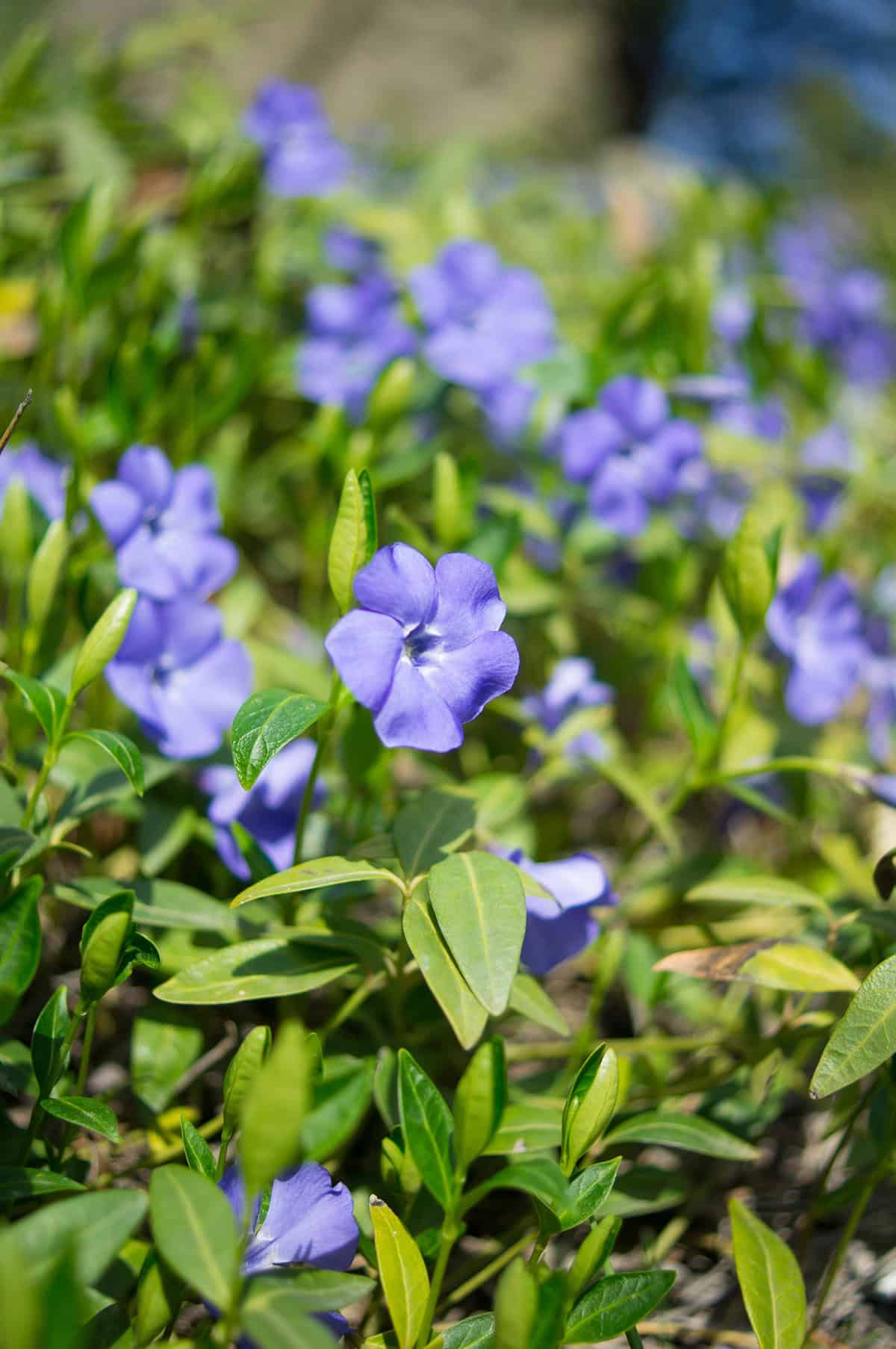
Periwinkle knits shiny evergreen leaves into a dense layer that smothers weeds. It grows 4 to 6 inches tall, and its trailing stems root as they spread, so coverage comes fast.
Blue to violet flowers appear in spring, with a few more in summer. Deep shade and dry soil rarely slow it down.
Trim runners that wander, and avoid planting it near woodland or natural areas. Vinca minor is invasive in parts of North America, so check local lists before planting.
Ajuga / Bugleweed (Ajuga reptans)
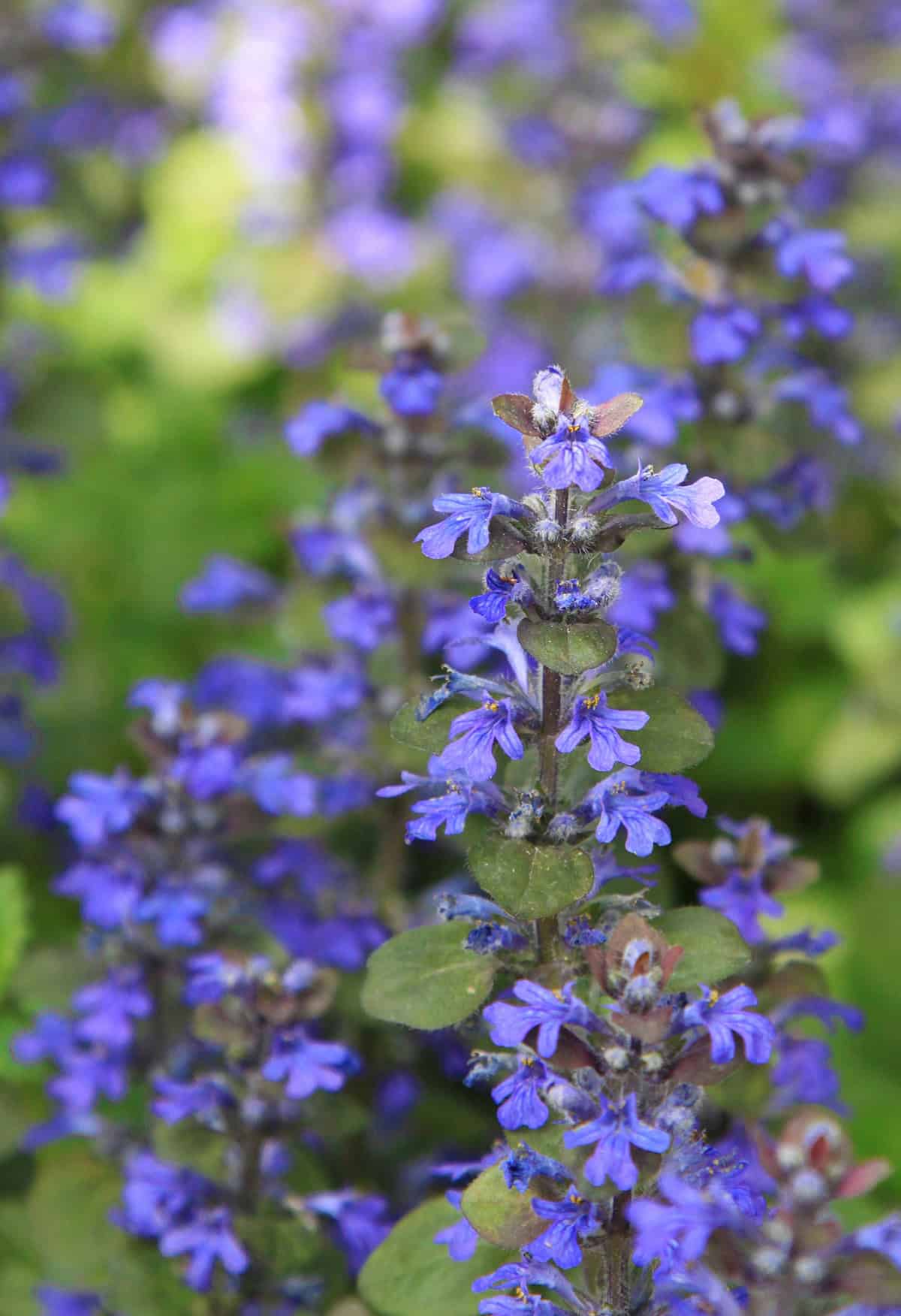
Ajuga forms a weed-smothering mat of low rosettes, with leaves in green, bronze or deep purple, and the variety decides the color. It tops out at 4 to 6 inches.
Short blue flower spikes appear in spring and stand out against dark foliage. It grows in sun or partial shade.
Plant it in moist, well-drained soil, and divide crowded clumps every few years to restore vigor. Crown rot strikes in humid, poorly drained sites.
Ice Plant (Delosperma cooperi)
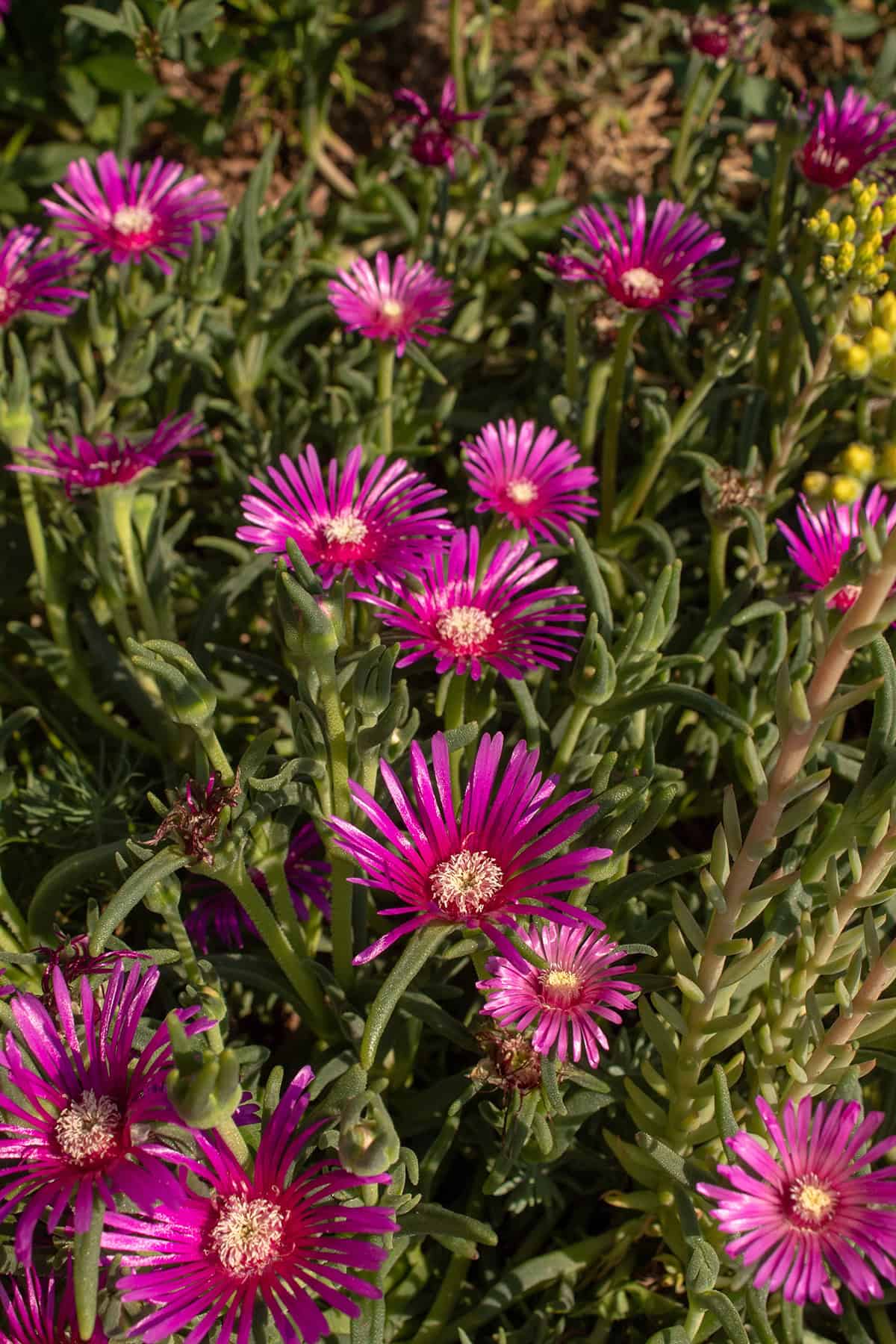
Thick, water-storing leaves help this succulent handle drought with ease. It hugs the ground at 3 to 6 inches and spreads across dry, rocky patches in full sun.
Vivid pink or purple daisy-like flowers appear in summer and continue for weeks. Cool weather tints the foliage red.
Sharp drainage is essential, since heavy clay and wet winters kill it.
Candytuft (Iberis sempervirens)
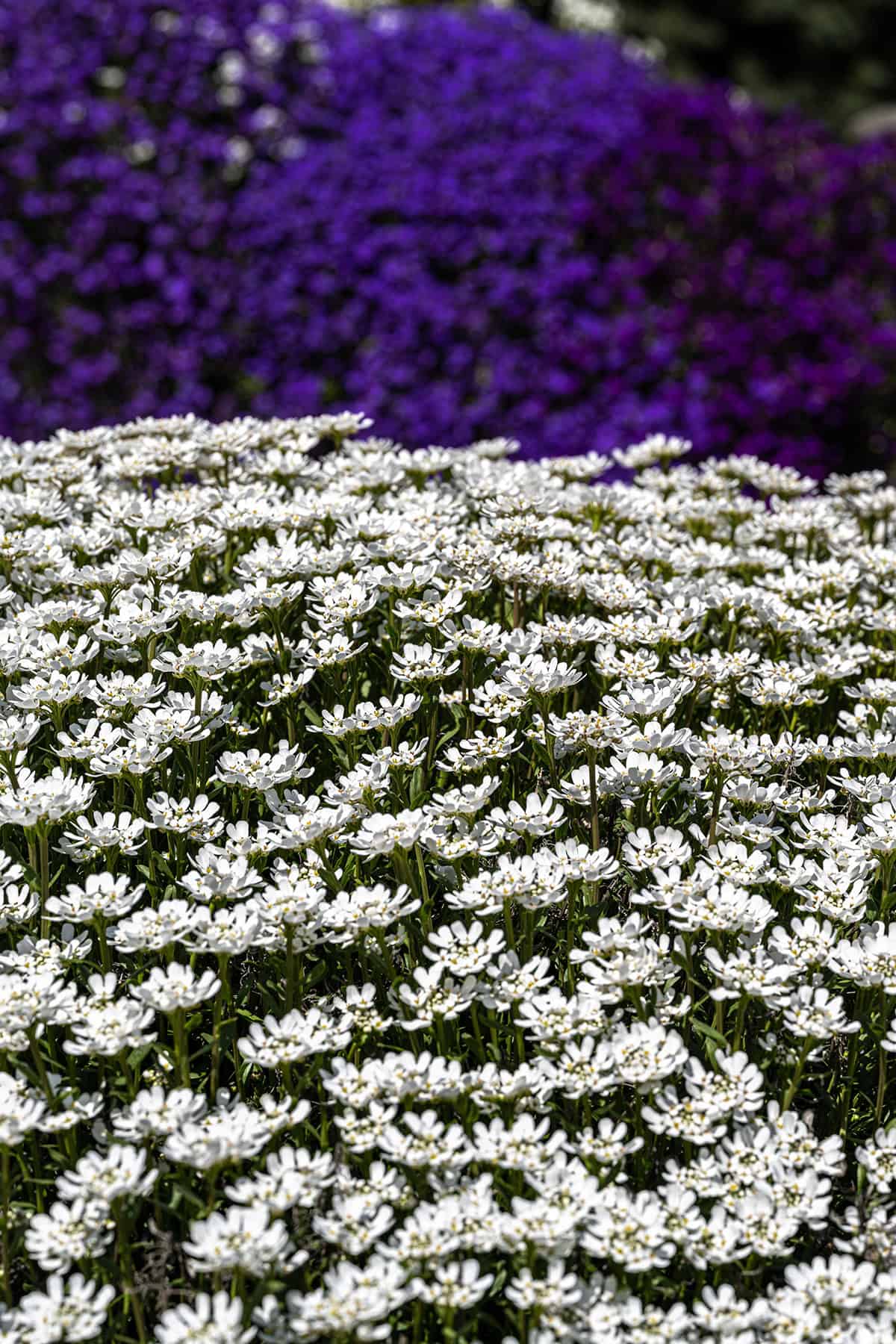
Candytuft forms neat evergreen mounds 6 to 12 inches tall, covered in spring with clusters of white flowers that last for weeks.
It grows best in full sun and loose, well-drained soil, along borders and in rock gardens. A quick shear after flowering holds the plants compact.
It tolerates short dry spells but dislikes wet soil, especially in winter.
Creeping Jenny (Lysimachia nummularia)
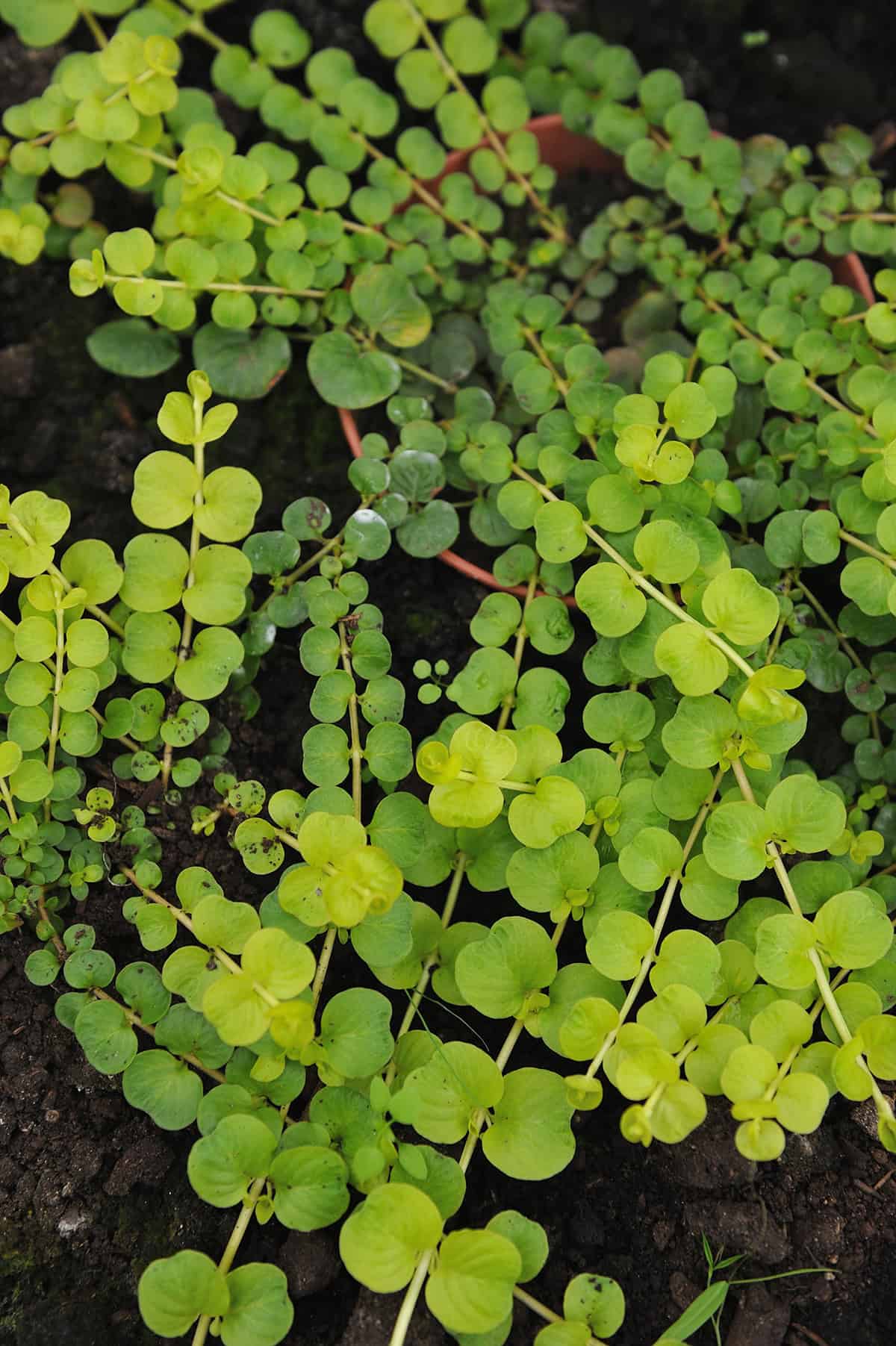
Coin-shaped leaves spread into a bright, low mat 2 to 4 inches tall, and golden forms light up containers and borders.
Yellow flowers appear in early summer. Moist soil fuels fast spread, which makes it handy near ponds and in rain gardens.
Consistent water produces the best color. It spreads aggressively and is invasive in some regions, so trim it back regularly and avoid planting it near wetlands.
Snow-In-Summer (Cerastium tomentosum)
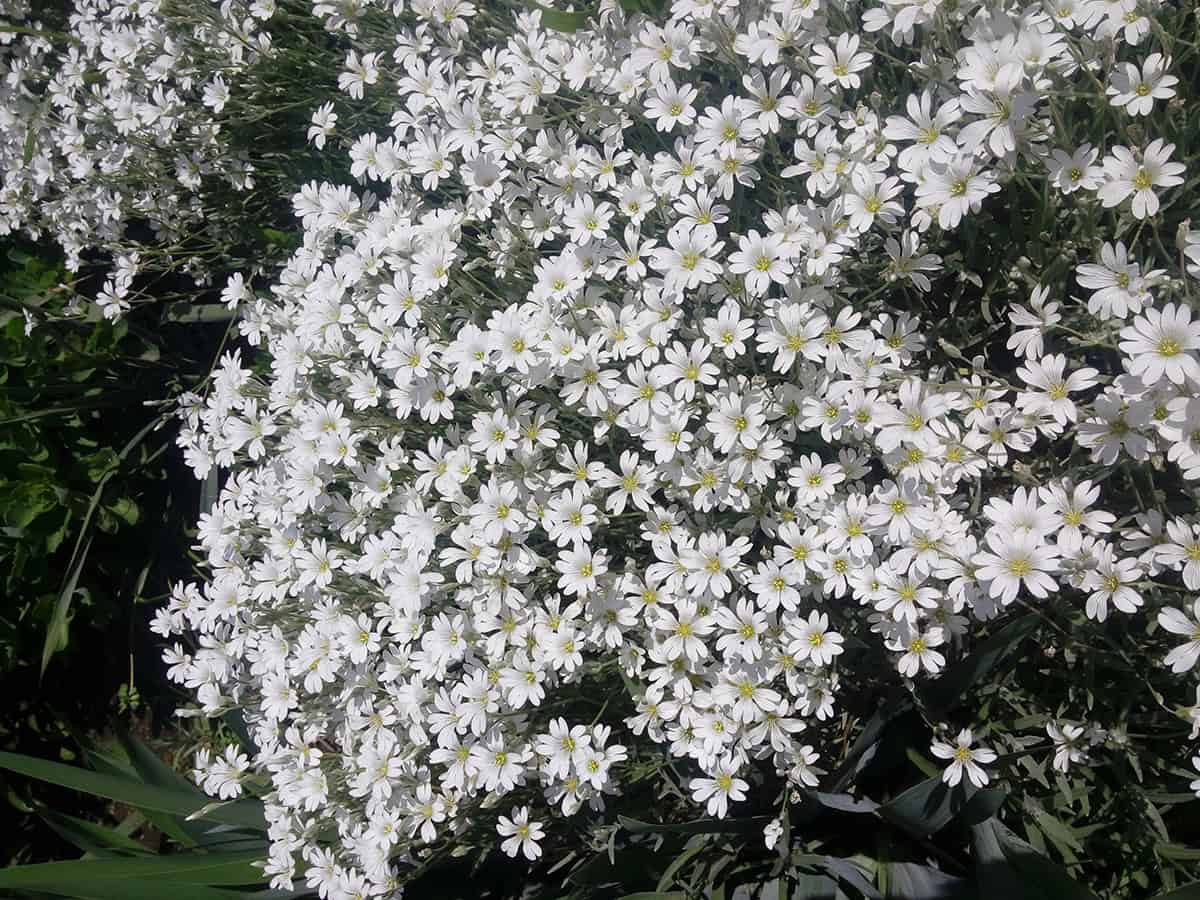
Silvery, woolly leaves form a mat about 6 inches tall that stands out against darker plants.
A flurry of white flowers covers the patch in late spring. Full sun produces compact, healthy growth.
Good drainage is essential. Shear after flowering to tidy the mat, and edge it yearly, since it spreads quickly.
Rock Cress (Aubrieta deltoidea)
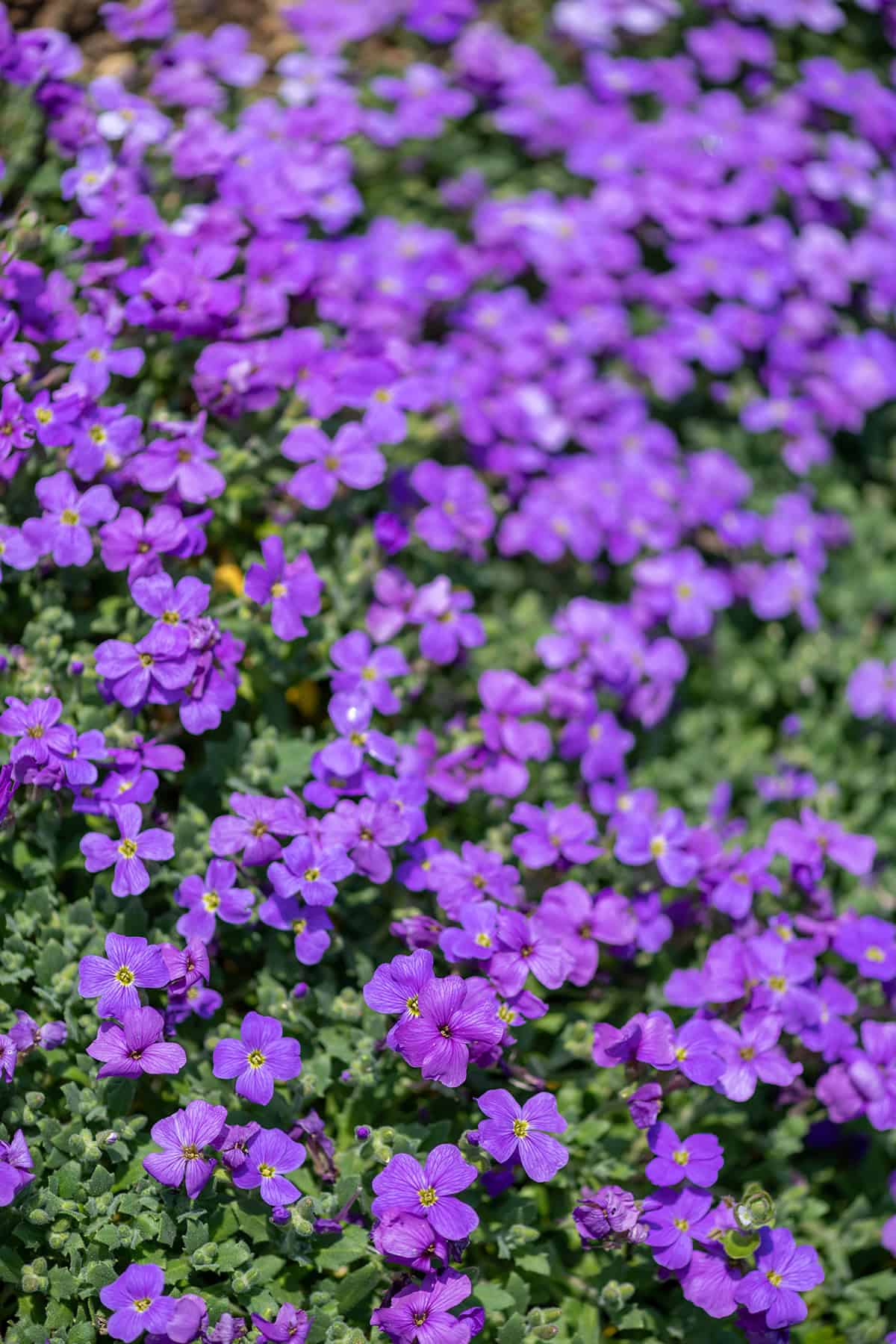
This early spring bloomer cascades over walls and rocky ledges in mats 4 to 6 inches high. Leaves persist through winter in mild areas.
Purple, pink or blue flowers pile up in early spring, and spring bulbs make good companions. Sun produces the most blooms.
Sharp drainage is essential. A light trim after flowering prevents woody growth.
Creeping Mazus (Mazus reptans)
Only a couple of inches tall, mazus spreads between stones and pavers with fresh green foliage through the season.
Small blue or purple tubular flowers appear in late spring. It tolerates light foot traffic and likes moist spots.
Partial sun or light shade is best. Water during dry stretches.
Blue Star Creeper (Isotoma fluviatilis)
Tiny, star-shaped blue flowers dot a fine, low mat from late spring into summer. Plants rarely exceed 2 inches tall.
It fills gaps between stepping stones and serves as a small lawn substitute, and it tolerates light foot traffic. Sun or partial shade is fine.
Water for evenly moist soil. Cold winters knock it back in some regions, though the roots regrow in spring in most cases.
Sedum / Stonecrop (Sedum spurium, Sedum acre)
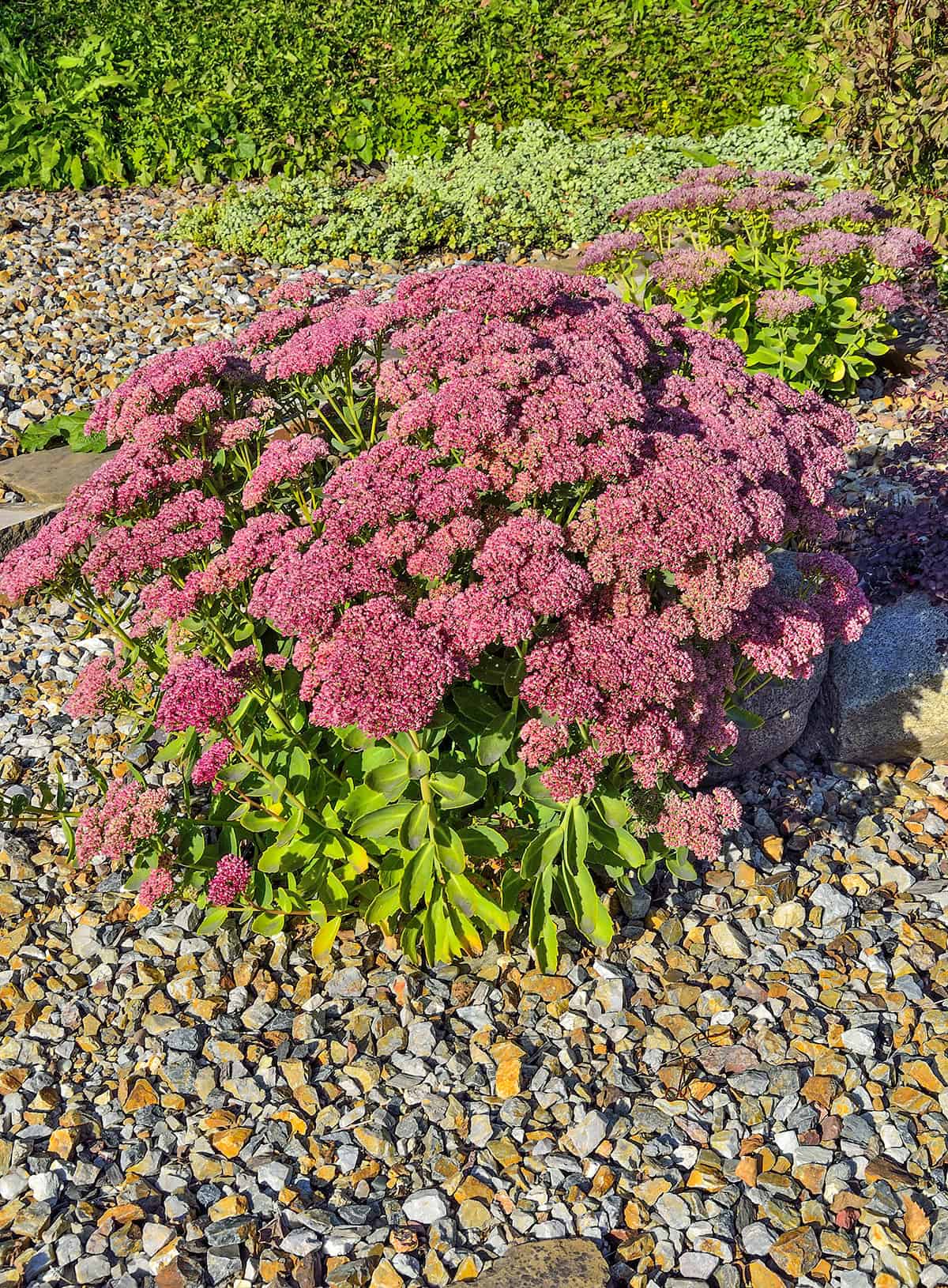
Fleshy leaves store water and make these stonecrops tough in drought. Sedum spurium grows 4 to 6 inches tall, Sedum acre hugs the ground more closely, and both spread steadily.
Starry yellow, pink or red flowers appear in summer, and fall tints the foliage red or bronze. Poor soil is fine.
Sharp drainage and full sun prevent rot. Water sparingly, especially in humid climates.
Basket Of Gold (Aurinia saxatilis)
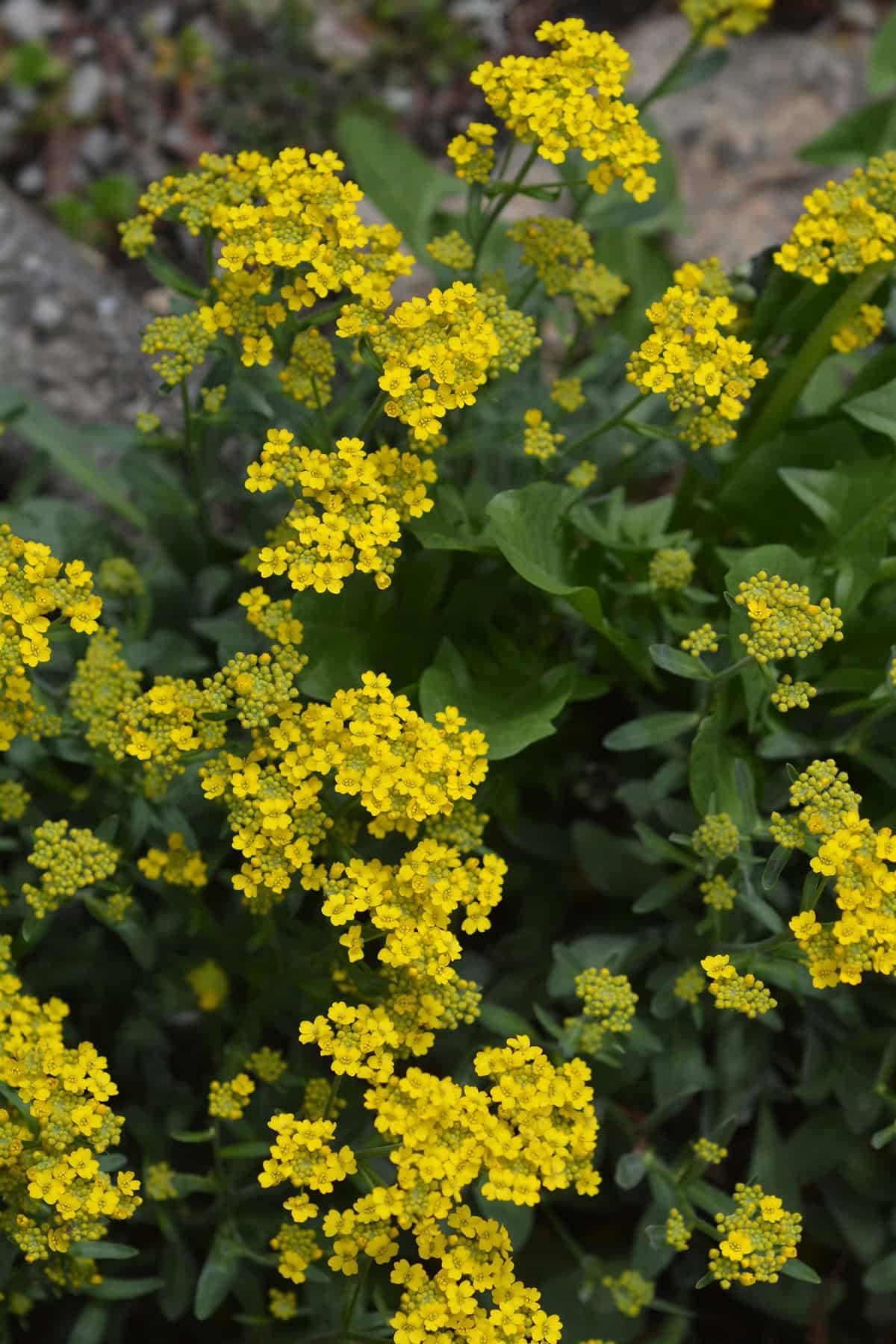
Mounds of gray-green leaves 8 to 12 inches tall erupt in bright yellow flowers each spring.
It thrives along sunny borders and spills over walls. Lean soil produces sturdier plants than rich ground.
Shear after the flowers fade for a compact shape. Heavy clay is a poor match.
Hardy Geranium (Geranium sanguineum)
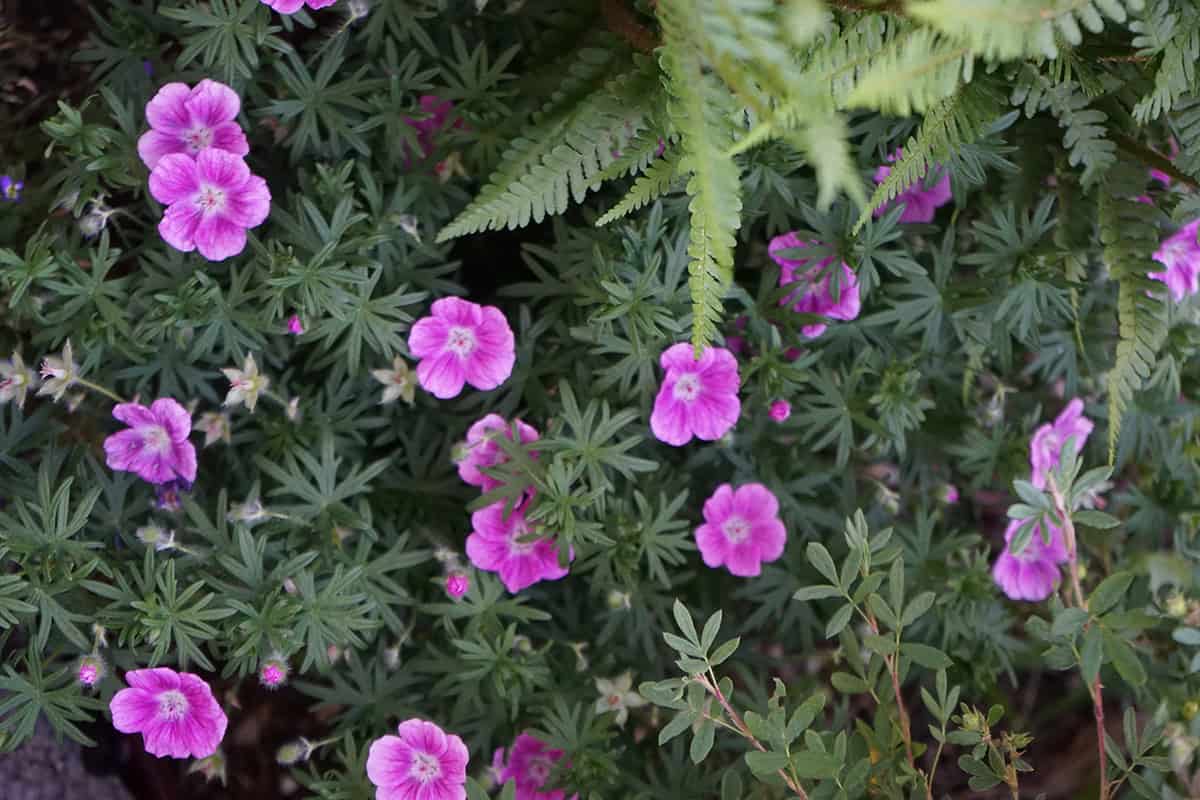
This low, mat-forming perennial grows 8 to 12 inches tall, with deeply cut leaves that form a dense clump and redden in autumn.
Magenta or purple flowers open in late spring and repeat in some years. Sun or partial shade is fine.
Average, well-drained soil is enough. Trim after the first flush for more flowers.
Creeping Speedwell (Veronica repens)
Tiny, glossy leaves form a tight mat about 2 inches tall that spreads slowly and neatly. Blue flowers appear in late spring.
It fits between stones and along path edges in sun or partial shade, in soil that drains well and holds a little moisture.
A light trim after flowering produces a denser mat. It tolerates only light foot traffic.
Serbian Bellflower (Campanula poscharskyana)
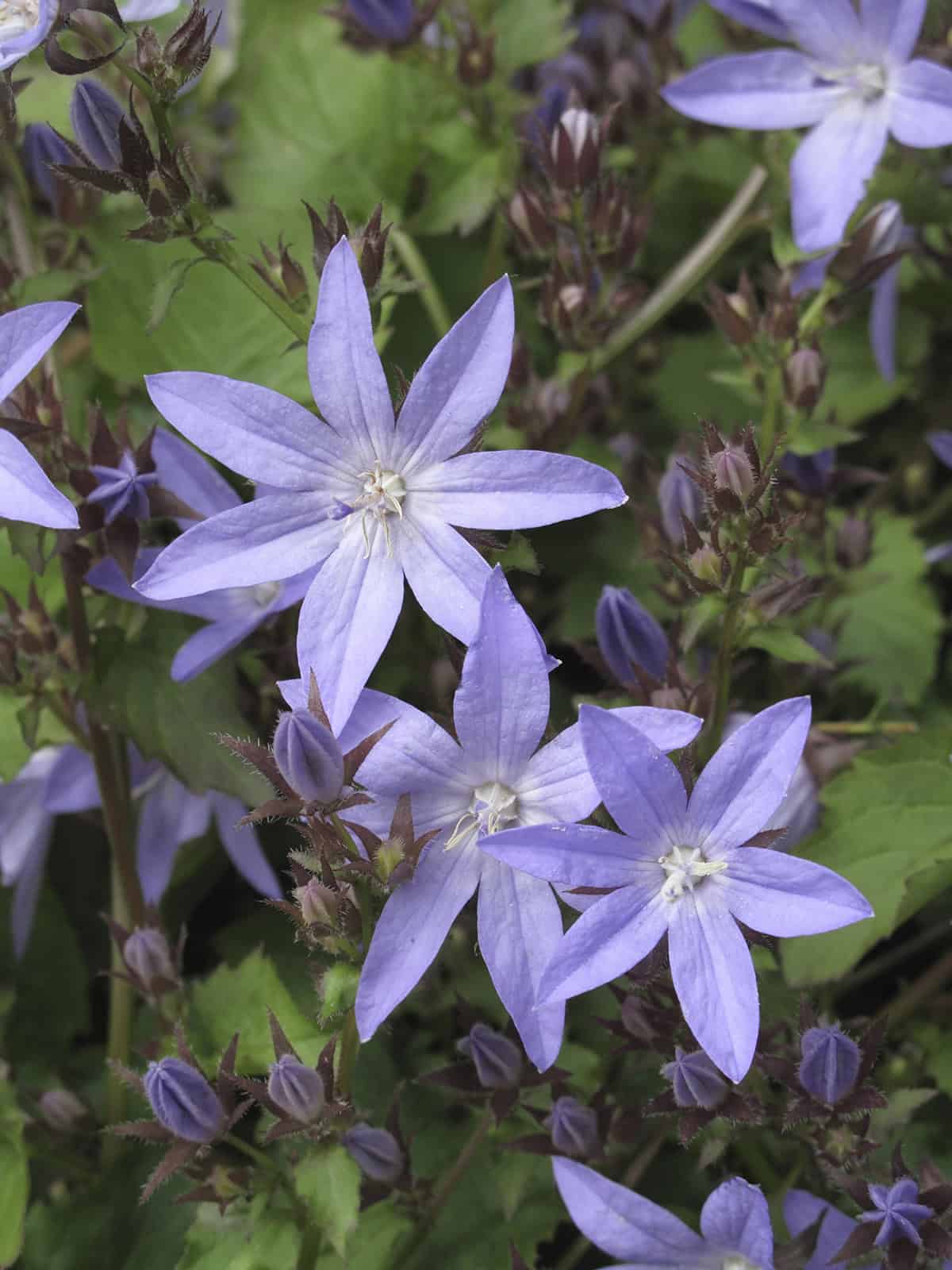
Trailing stems spread across the ground or tumble over walls, generally under 10 inches tall, in a soft green layer.
Starry lavender-blue flowers appear from late spring into early summer, and foliage lingers through mild winters. It handles some shade.
Plant it in well-drained soil with moderate water, and cut it back after flowering if it gets unruly.
Trailing Verbena (Verbena canadensis)
Spreading stems knit into a mat 6 to 12 inches tall that flowers from late spring through summer in purple, pink or red.
It fills sunny borders and containers and holds up to heat and short droughts. Good drainage protects the roots.
Deadhead for more blooms, and skip rich soil, since it prefers lean ground.
Helianthemum (Rock Rose)
Rock rose grows into a low, woody-based plant 6 to 12 inches tall with narrow gray-green leaves, and dry, sunny spots are its preference.
Papery flowers in yellow, orange, pink or red open in late spring and early summer. Each flower lasts a day, but new buds follow in quick succession. Full sun is essential.
Good drainage is crucial, especially in winter. A light shear after flowering preserves its shape.
Creeping Cinquefoil (Potentilla reptans)
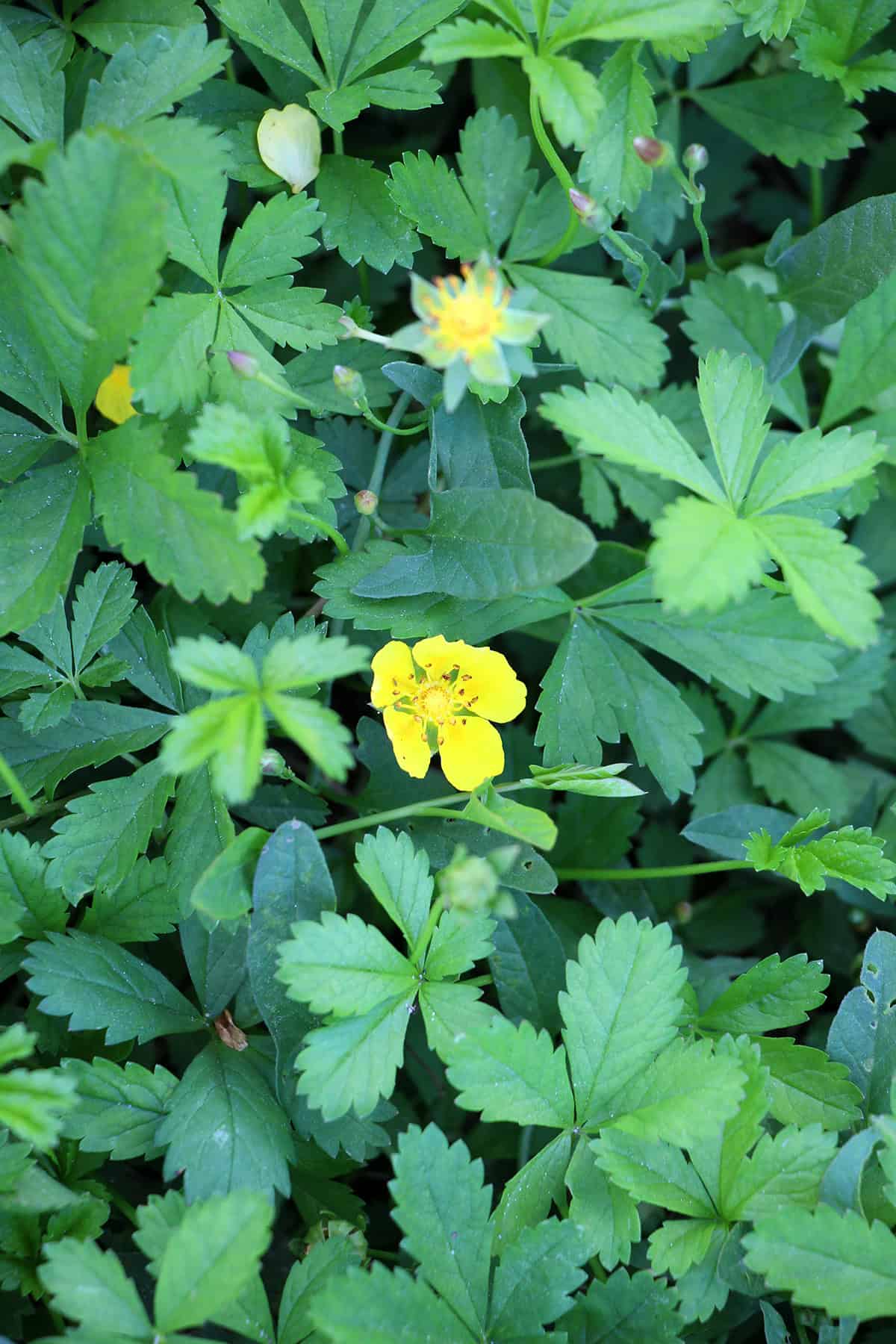
Trailing stems root as they spread and form a mat under 6 inches tall, with leaves divided into five leaflets.
Five-petaled yellow flowers appear in summer. It tolerates most soils and light levels and spreads aggressively in rich ground, so plant it where fast coverage is welcome and away from beds.
Trim back runners that stray. It is considered a weed or invasive in some regions, so check local guidance first.
Sweet Alyssum (Lobularia maritima)
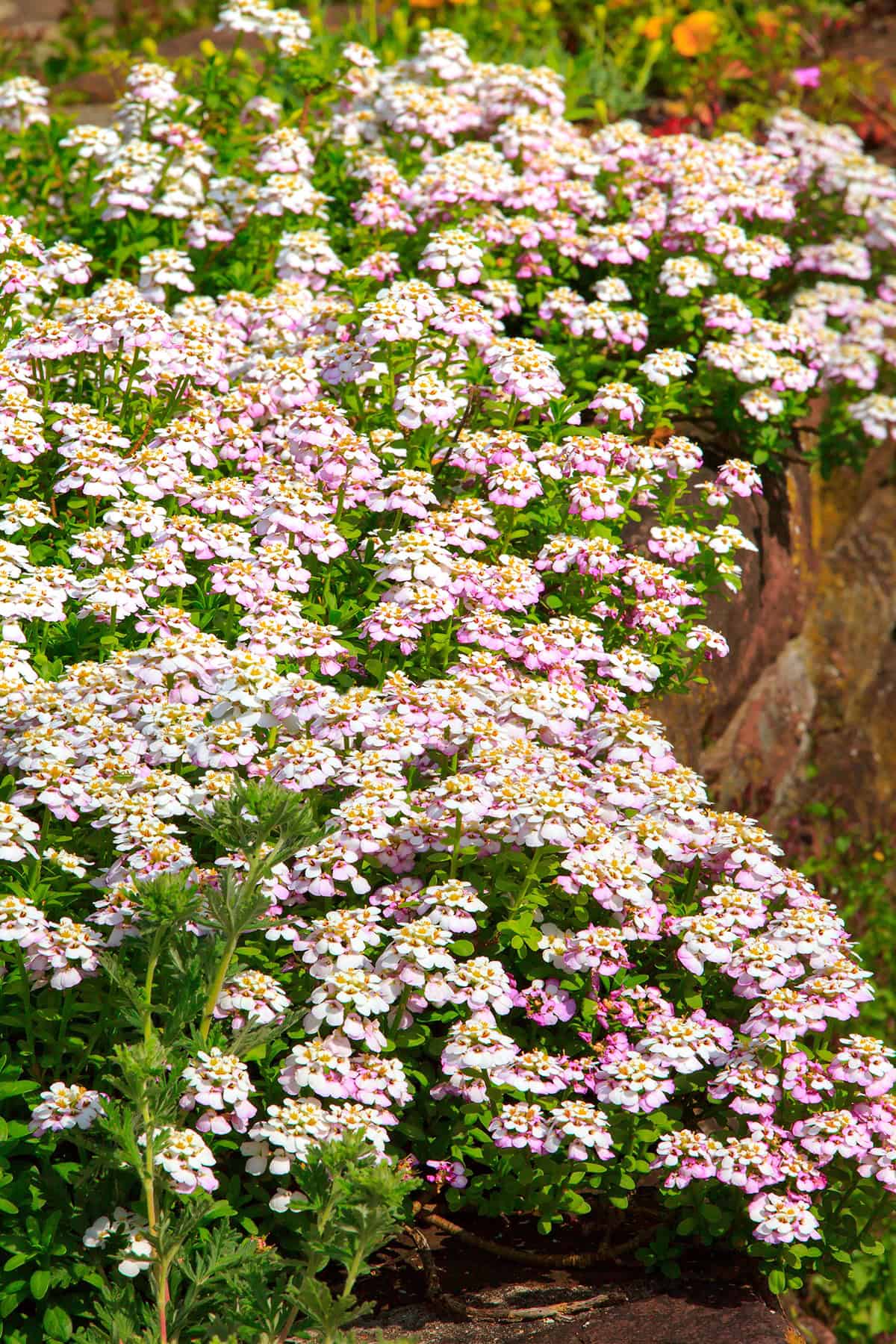
Sweet alyssum grows 3 to 6 inches tall and spreads gently, covered in clusters of tiny, fragrant white, pink or purple flowers in cool weather.
Most gardeners grow it as an annual ground cover. It likes sun to partial shade and loose, well-drained soil.
Shear it in midsummer to spark a second flush, and water regularly during hot spells.
Alpine Aster (Aster alpinus)
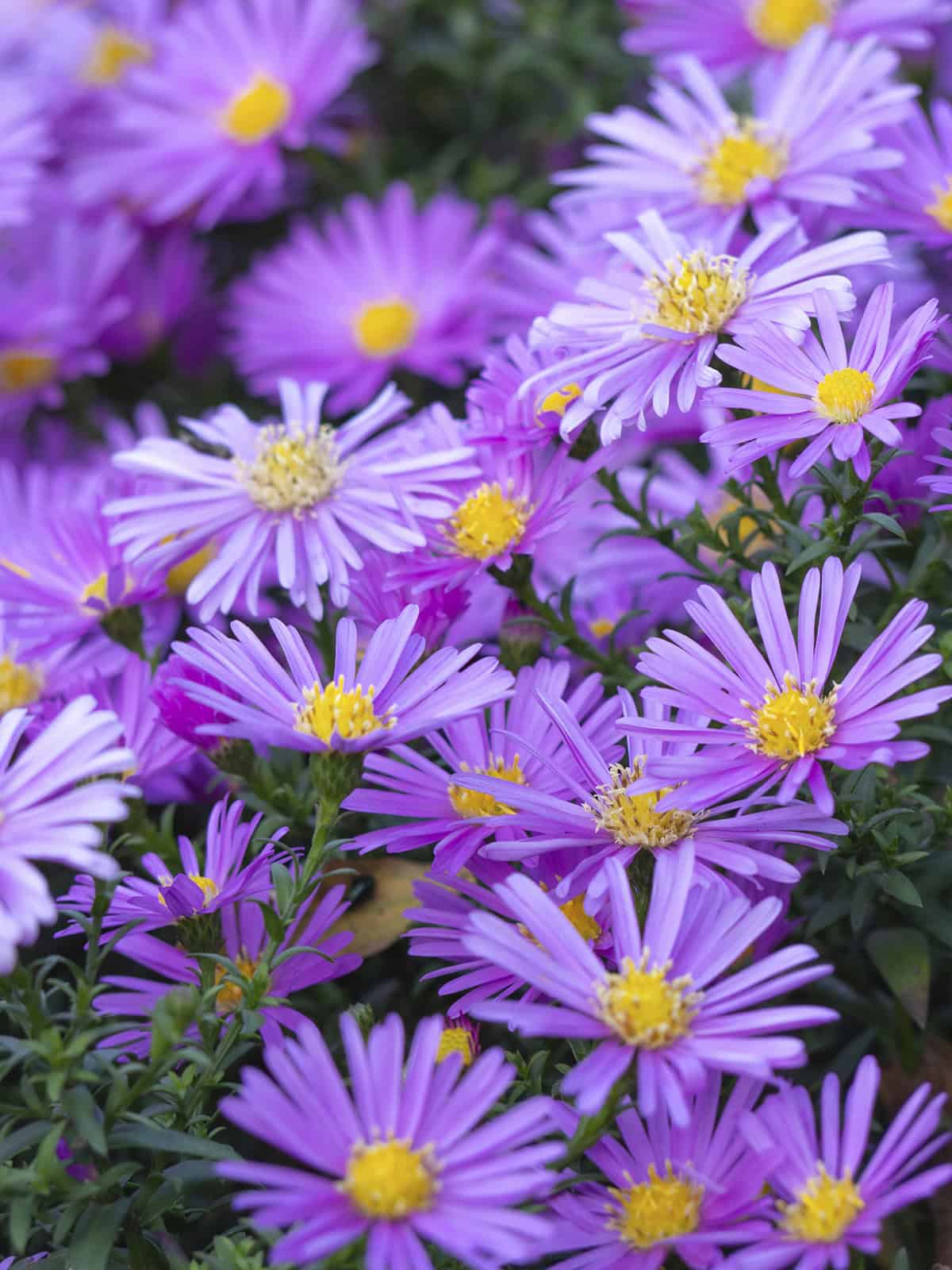
Compact alpine asters grow 8 to 12 inches tall, with narrow leaves in a low clump that fits rock gardens well.
Large, daisy-like flowers in purple or blue with yellow centers open in late spring. Sun produces stronger blooms.
Plant in well-drained soil, since rich ground leads to floppy stems.
Dianthus (Low-Growing Varieties)
Low-growing dianthus forms dense mounds 4 to 8 inches tall with blue-green foliage, and many types hold leaves through winter.
Fragrant pink, red or white flowers open in late spring, and some varieties repeat. Borders and rock gardens are natural homes.
Full sun and well-drained soil are essential. Shear after flowering for fresh growth.
Erigeron (Mexican Fleabane – Erigeron karvinskianus)
Fine stems sprawl into loose mats 6 to 12 inches high. Small daisies that open white and fade to pink bloom from spring into fall where winters are mild.
It thrives in wall cracks and between stones, and established plants tolerate dry spells. Sun produces the most flowers.
Cut it back if it thins out. It self-seeds readily and has naturalized aggressively in places such as Hawaii and Australia, so plant it with care.
Phlox douglasii (Douglas Moss Phlox)
Low cushions of evergreen needles sit just a few inches above the ground and hug rocks and gravel. The dense mat fits alpine corners and narrow path edges.
Bright pink, purple or white flowers cover the foliage in early spring, close to the ground for a neat, low display. Full sun is essential.
Sharp drainage matters most, since clay soil and wet winters kill the plants. Add grit to heavy soil, or plant on a slope or raised bed.